This insight is the last in a mini-series that has questioned the value and importance of a Quiet Time, Christian Worship, and Christian Service. Also Christian Mission and Persistent Prayer and concludes with a look at the backstory of Holy Communion.
To do so I want to offer a very brief summary of the dissertation I completed in my final year at Manchester University entitled ‘From the Family to the Ecclesia’. In five Chapters it explores how Holy Communion (Eucharist) has been formed from its family roots in the celebration of the Passover and how Jesus transformed it as a result of the completion of his earthly ministry.

Chapter 1 – The Passover
The Passover has a very special place in Jewish religious tradition and has been continuously observed for over 3000 years. It has its roots in the events that took place in Exodus 12. The Passover was celebrated in the wilderness at Mount Sinai as recorded in Numbers 9; 1 – 14 and then inferred in Joshua 3: 5 to sanctify and consecrate themselves before crossing the river Jordon.
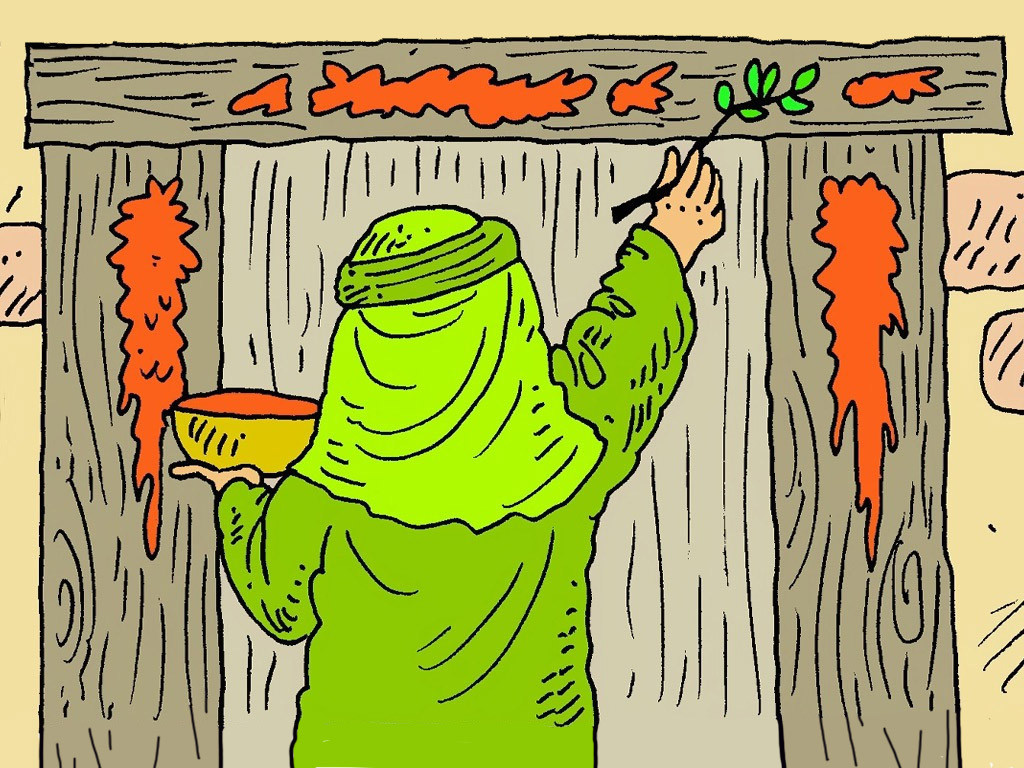
The Lord spoke to Moses and Aaron in the land of Egypt. He instructed them to sacrifice an unblemished one year old male sheep or goat, four days before the feast was to commence. A bunch of hyssop was to be dipped in the blood of the sacrificed animal and daubed on the lintel and the two posts of their homes. During the night of the Passover the Angel of the Lord passed over and killed any first born male in houses that didn’t have a covering of blood.
Thanks freebileimages.org
Passover is a meal and a liturgical form that for all who attended, sought to renew their legal and loving covenant before God and each attendee. The Passover acts as a right of salvation (a de-sinning) and protection from the Angel of Death and the freedom they found when leaving Egypt and settling in the Promised Land. So the observance of the feast represented a thanksgiving for their deliverance.
Chapter 2 – The Jewish Family
Passover is very important in the Jewish family with the writer Philo, in the first century AD, recording that it was celebrated ‘by the whole people, old and young alike’. In the light of a hasty departure from Egypt they ate unleavened bread as there was no time for any leavening of ordinary bread.
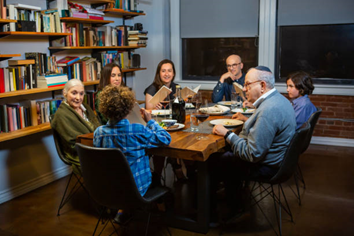
Each Friday ushers in the Sabbath with all its rituals and in an essay by Mr Lewis, ‘it was felt to be the happiest hours of a Jewish person’s life spent within the home’. The purpose of the feast was to strengthen the ties of kinship between family members at the start of each New Year.
The ‘Seder’ or ‘Order of Service’ is used in the home on the first night of Passover and linked to Exodus 13 where parents were to pass down and inform their children about the Lord’s deliverance from Egypt. Meals together acted as a form of hospitality to nourish the body in a physical manner.
There is no suggestion that in the Passover, any food consumed represented the eating of a Deity. It was purely an act of thanksgiving and a sharing from the cup of blessing. Before the Seder meal a rite of cleansing took place that included cleaning the house of any leavened bread and represented the home being sanctified and consecrated.
A few crumbs were left purposely for the master of the house to find and remove. The service is very detailed and the sequence of events are very complex either held in the home or in a Synagogue. However, both will include the wine cup, unleavened bread, a meal and a concluding blessing as referenced in Psalms 113 – 118.
Chapter 3 – The Transformed Passover
This chapter is central in my dissertation as it tries to understand how the Eucharist has developed from the Passover, on the basis of New Testament sources and references to Ecclesiastical developments. In essence we compare the Passover as celebrated within the family to the Eucharist celebrated publically in the church.
It’s interesting how the Eucharist has received less attention compared to Critical Biblical Studies. As such the service is presented in a liturgical form rather than being critically defined!

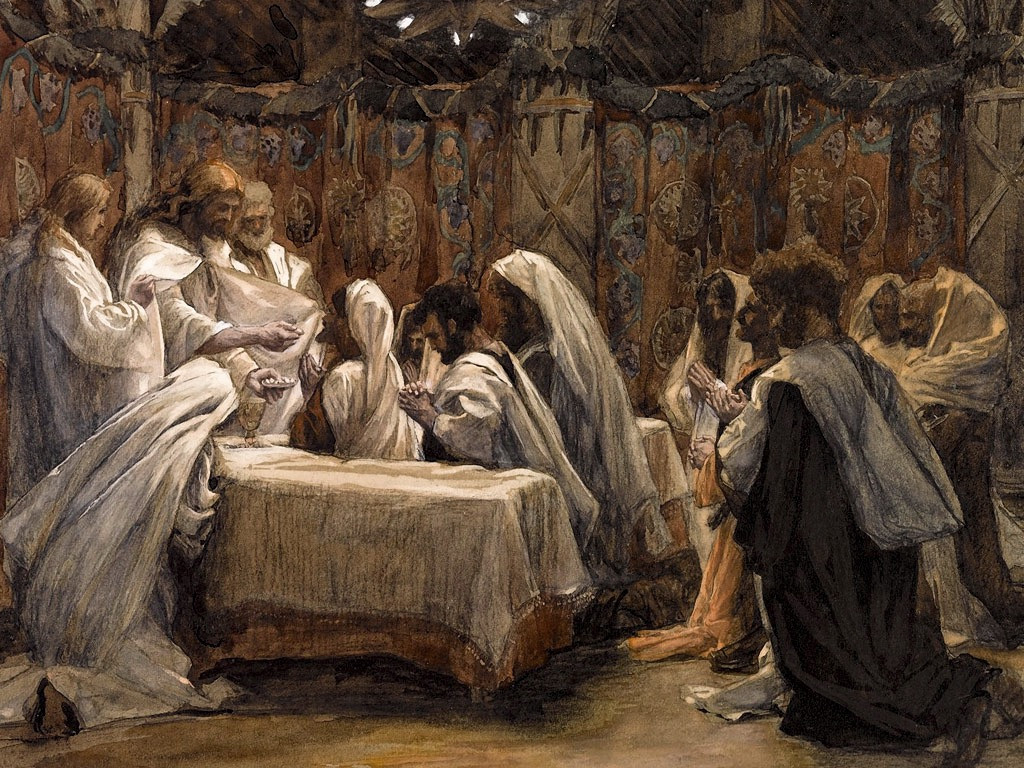
Jesus takes the bread before the cup freebibleimages.org
In the gospel writings (Matthew 26: 17 – 30, Mark 14: 12 – 26, and Luke 22: 7 – 22) it suggests that the Lord’s Supper was in essence the Passover. Jesus transformed the most celebrated Jewish festival into a service whereby he represented the sacrificial Paschal lamb. It enabled the de-sinning of all his followers and to be rescued from the Angel of Death and encompassed by the Angel of Life and Light.
There are certain sacrificial words and images that are important in any Eucharist service. 1) The actions of Jesus. 2) The Taking and Giving. 3) Thanksgiving. 4) The breaking and giving of bread and wine. The Apostle Paul writing in I Corinthians 10 and 11 act as historical sources about twenty years after the death of Jesus and ten years before the earliest gospel accounts.
Justin Martyr gives us an account of how the Eucharist was celebrated around 120 years after its institution by Jesus. It was very personal with no meal and included a sermon before communion. It was private rather than public and held in an ordinary room lead by a president or leader.
There are three main theological concepts within the Eucharist. 1) Sacrifice. 2) Consecration. 3) Presence. (How the presence of Jesus is made real within communion). For the Jews Salvation represents a corporate experience through a Covenant with God but does not exclude individual salvation For the Christian we acknowledge the Old Covenant but stress more an individual relationship with God through Jesus Christ. Community, individual faith and fellowship are equally vital and one should not be at the expense of another.
Chapter 4 – The Eucharist
The Eucharist relates essentially to the theological concept of salvation in a liturgical form as recorded by Paul in 1 Corinthians 11; 17 – 34 and acts as the institution and celebration of the Lord’s Supper, which transformed the Passover into the Eucharist
There are different practices and understandings that have emerged in the Catholic, Orthodox and Protestant traditions. They range from the belief that the shared bread and the wine are transubstantiated to represent the actual body and blood of Christ to the basic belief that salvation is by ‘justification by faith’ alone than any keeping of the Jewish Covenant and Law
There are other traditions in the free churches, that share the bread and wine in the Eucharist in a very simple form that reminds believers of the atoning and redeeming work of Jesus and how in each service they can be forgiven, renewed, and re-energized by the Holy Spirt for Christian witness and service.
By the 4th century the celebration of the Eucharist had moved from the home into a public place of worship in a church and more formalised by various civil and cultural practises. Each attendee at a Eucharist had to seriously consider their own relationship before the Lord and seek to confess and be forgiven afresh for all sins committed. It is on the basis of Jesus’s death and resurrection alone that such sins may be forgiven and in accord with the Lord’s Prayer, as we are forgiven we are and should be in a position to forgive all who have transgressed us.
Instead of looking to celebrate next time in Jerusalem as in the Passover, the Christian has the hope and assurance that one day we will be in the presence of the Lord in the heavenly realms.
Chapter 5 – Parenthood and Community
It is important to note how the celebration of the Eucharist has been celebrated in respect to the family, local church and community. A church and individuals can find strength and a renewed sense of purpose and fellowship in celebrating communion that can be defined as: ‘one who shares bread with another’
Depending on one’s church tradition Eucharist services will include certain liturgical practises that are not adhered to in more congregational and free churches as represented in these photos from Teddington Baptist Church.
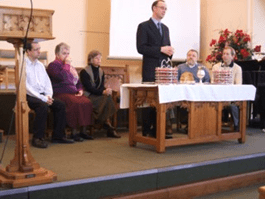
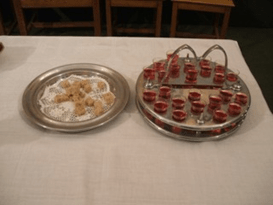
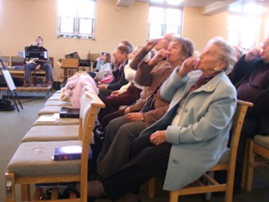
Thanks Teddingon Baptist Church Middlesex
A Minister or leader of the fellowship will refer to 1 Corinthians 11 that’s reminds the congregation of the words of Jesus in the transforming of the Passover to the Lord’s Supper. Jesus is celebrated as the Pascal lamb who died for the forgiveness of all our sins. The shared bread represents the broken body of Jesus and the shared cup represents the shed blood of Jesus.
Both the Passover and the Eucharist, experienced in different forms, may represent a homely, personal and public celebration of God and humankind. In seeking and finding the salvation and special presence of the Lord it fosters a sense of communities gathering together in kinship and devotion to God.
In respect to parenthood and community, the Passover may be exclusive to race and religious identity. Christians met together in a none-racial manner as in the words of Paul that there should be neither Jew nor Greek and reflects different cultures and identities.
Any Eucharist should be truly catholic, in the sense of being universal, for all to experience being ‘justified by faith’ before God and humankind through Jesus. The Eucharist in all churches should act as a representation of God’s kingdom here on earth as reflected in heaven.
Take Away
The Eucharist as a Christian rite has its roots firmly in the Jewish Passover but through Christ became radically transformed as a reminder with thanksgiving of the life and ministry of Jesus.
The Passover and Eucharist in all its forms represents how important it is to foster family love and ties that strengthens family and community on the basis on a Covenant love, relationship and laws that reflect God’s Holiness. We all should seek to aspire to a life of holiness, in the home, our liturgical fellowships and to all within our local and national communities.
Graham
Selah: (Pause to think calmly on what has just been read) and check out A Time to Worship with Motivational Moments
 Explore to Inspire