
This insight is one of three around the theme of ‘Knowing the personal presence of God.’
Practising the presence of God. The bread of presence. Jesus as the bread of life.
We ended our last insight with the words ‘Bread of heaven, feed me now and evermore.’ We start this new insight with a saying of Jesus: ‘I am the bread of life.’
At this present time there is a lot of testing that is taking place with positive and negative results. Remember Job and all the advice he got or didn’t get! When we are stretched in faith we may test positive or negative, but the Lord wants us to love and follow him which will affect our relationships, work commitments, church and community activities.
We have various outlines to consider in John 6: Who am I. Hunger. Signs. Sacrifice. Worship.
Who am I?
Jesus makes a statement. This is who I am and what I represent. A saviour, friend, teacher. I am the son of God. Followers, disciples and Jewish leaders respond to him by saying is that really who you think you are?
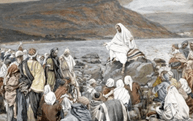
After the feeding of the 5000 (1-15), people expected miraculous food and followed him around Lake Tiberias and Capernaum. They witnessed God’s grace but Jesus believed that they were thinking more about their stomachs than their souls.
Hunger
In life there are two main appetites to feed. One for physical bread and two for spiritual food. We may be rich in one and poor in another. We naturally have to think about where our food, shelter and clothing comes from. However, Jesus reminds us that life has more meaning than the material. We may have a hunger for truth and love but it is only in Christ that our desires may be fully satisfied.
Signs
People (25-34) wanted a sign from Jesus to prove that he was different from the world just like the manna (bread of God), which they believed Moses gave them in the wilderness.
Jesus points out that it wasn’t Moses who produced the manna but it was God. It is in God that we ultimately trust for our provision but so often we look to others and ourselves to provide it. Bread sustains life (35-40). Jesus brings rest to a restless soul and satisfaction to a hungry heart.
Many of the Jews were complaining and murmuring (41-51). How often do we complain about our church leaders, work colleagues, family and community members? The leaders rejected Jesus because they judged him by human standards. Jesus as an ordinary man could not represent the sacred bread of life, as found in God.
Sacrifice
It is hard to understand that Jesus’s body represented the bread of God (52-59). In ancient times a sacrifice to a god would be considered quite normal. A whole animal was sacrificed but only a part of it was burnt. Other aspects of the animal were given to the priest and some offered to the worshippers in the temple grounds, where their god was seen to be like a guest.
In the eating of the sacrifice the worshipper felt as though they were god-filled. The ancients in their own way, knew about having an identity with their god and the value of consuming their god.
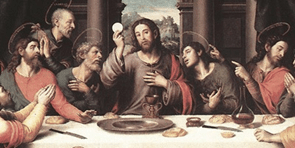
In Jesus we have this great mystery that God has taken on human form and understands our condition. God is external, yet when we partake of him as represented in Jesus’s body and blood he becomes personal to us. As we take Jesus literally, not just theologically, we can know daily his living presence.
Jesus’s words are very hard to understand (60-65). At the heart of all religion there must be mystery because it is other worldly. It demands a surrender and an acknowledgement that Jesus is both human and divine. In all we say and do, if it has no divine purpose then it is worthless.
People’s attitude to Jesus changed (66-71). Some turned and walked away. Judas betrayed him but many followed right to the cross. In the trials of life we follow Jesus through mystery and with faith, or in ignorance and with pride to be tested positive or negative.
Worship
For me the key to the whole of John 6 can be found around verse 29 “The work of God is this: to believe in the one he has sent.”
Lots of disciples and followers appreciated Jesus for his miraculous signs and the food he provided. Various Jewish leaders disputed his claim to represent and be a bread provision from God. Jesus teaches that it is better to work towards eternal food that does not perish rather than earthly food that will decay.
The Lord wants our praise and worship first and in that context we trust Him to guide and provide. We are often tempted to rely on our own opinion and action planning and then wonder why we have missed God’s blessing.
In practising the presence of God, may we put Jesus first so that in all our work and activities we have that eternal and earthly prospective as reminded in the worship song: ‘Seek ye first the kingdom of God.’
Selah (pause to think calmly on what has just been read)
Graham
 Explore to Inspire