
This insight is one of three around the theme of: 1) Thin line, sacred space in church 2) Thin line, sacred space online 3) Thin line, sacred space within community
In Church The concept and understanding of ‘thin line theology and sacred space’ is fascinating. There is a recognition that the distance between heaven and earth is very narrow in certain locations and becomes for people of faith, a special space.
In 2016 my wife and I enjoyed a two week tour of Scotland that included a visit to the island of Iona. Since the arrival of St Columbus some 500 years ago, it has been considered a sacred space. We found the place very inspiring and the brightness of the sky gave the land around us a broader width and depth.

In these three insights I want to explore how thin line theology, (being aware of the presence of God when attached to sacred places) has affected corporate worship in church, online and within community?
We can also think about how they may relate to each other in the future?
In the Old Testament there are various places and situations where God’s presence was felt, as in the Garden of Eden to Adam and Eve. Noah was given instructions for the building and journey of the Ark. The Lord revealed himself personally and in unique ways to Abraham, Kings, prophets and ordinary believers. In the latter chapters of Exodus Moses is instructed on how to build the ‘tent of meeting.’ Then in Exodus 40: 34, we read ‘the cloud covered the tent of meeting, and the glory of the Lord filled the tabernacle,’ which signified God’s presence within the tent.
In the New Testament, Jesus represented God in human form. Wise men worshipped at his birth. Jesus trod a ‘thin line’ at his carpenter’s bench, in discussions at the local synagogue and speaking to the Jewish and Roman leaders. Jesus was an example of the Lord in everyday situations as seen in his miracles and teachings. In his death on the cross, rising from the tomb and in many resurrection appearances that ‘thin and confusing line’ became sacred.
In Matthew 26: 26 – 29 Jesus instituted the Lord’s Supper in an upper room. “Take, eat: this is my body.” He took a cup and said “Drink of it, all of you,” in remembrance of me. During communion we pause to give thanks for Jesus’s life and death. To confess our sins, to bring our heartfelt worship and to renew a covenant of love and commitment whilst sensing God’s forgiveness and presence.
Throughout the world there are churches where a sense of God is felt and they act as a sign of something far bigger than our limited human existence. The name ‘church’ only developed after Jesus’s death and ascension and the New Testament portrays the church as a person not as an institution or building.
In Matthew 16: 18 Jesus speaks to Peter and sees him as a rock on which the church will be built. The church consists of people, universally bound together in a spiritual union as this picture of candles represents.
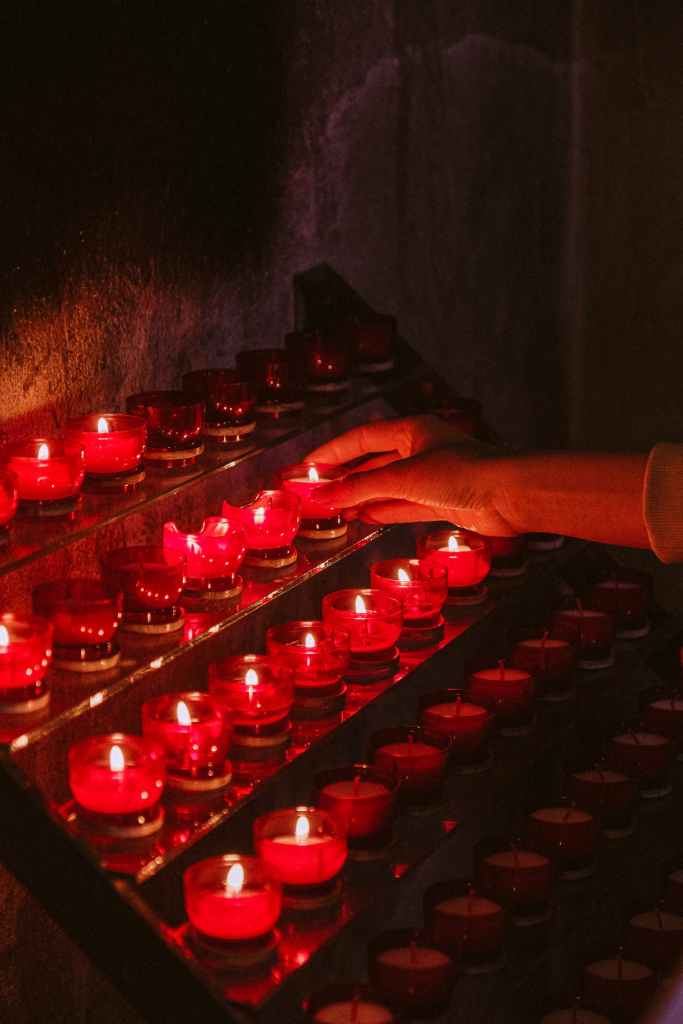
Lighted Red Candles Photo (pexels.com)
During this time of lockdown when the physical church buildings have been closed, has it meant that the church no longer exists or is irrelevant to daily worship and living?
Off course not, because the Lord’s house represents a gathering of people, not a specific building, who can meet in a different form as expressed with the development of online church.
This raises a subsequent question for our second insight. How viable and relevant will online church be, when we return to spontaneous worship and fellowship in the physical church buildings? The third insight will consider how our worship and witness connects to community. The purpose of the church is to be set apart to love God and to represent Him in service to our local community however that might be?
As we conclude this insight we might want to think about how the church of 2021 will develop into the future? Is it going to be a ‘broad line church’ with a theology that represents more secular space than sacred?
Is it going to be a ‘welcoming line church’ for all to abide in, as a sacred space of worship to God?
As we seek the Lord’s presence in a sacred space it is vital to rest there for a while, not asking or expecting but just receiving His refreshment and renewal which is transformative.
Selah (pause to think about what you have just read)
Graham
]]>
 Explore to Inspire