
Paul’s third missionary journey (A.D. 52 – 57) In our studies so far Luke has shared some amazing insights into the life and ministry of St Paul. We continue with his third journey and further snapshots of who Paul met and interacted with. We have considered our own seasons in life that reflect times of challenge and faith and in this study we will think about that season from around 55 to late 80 plus years.
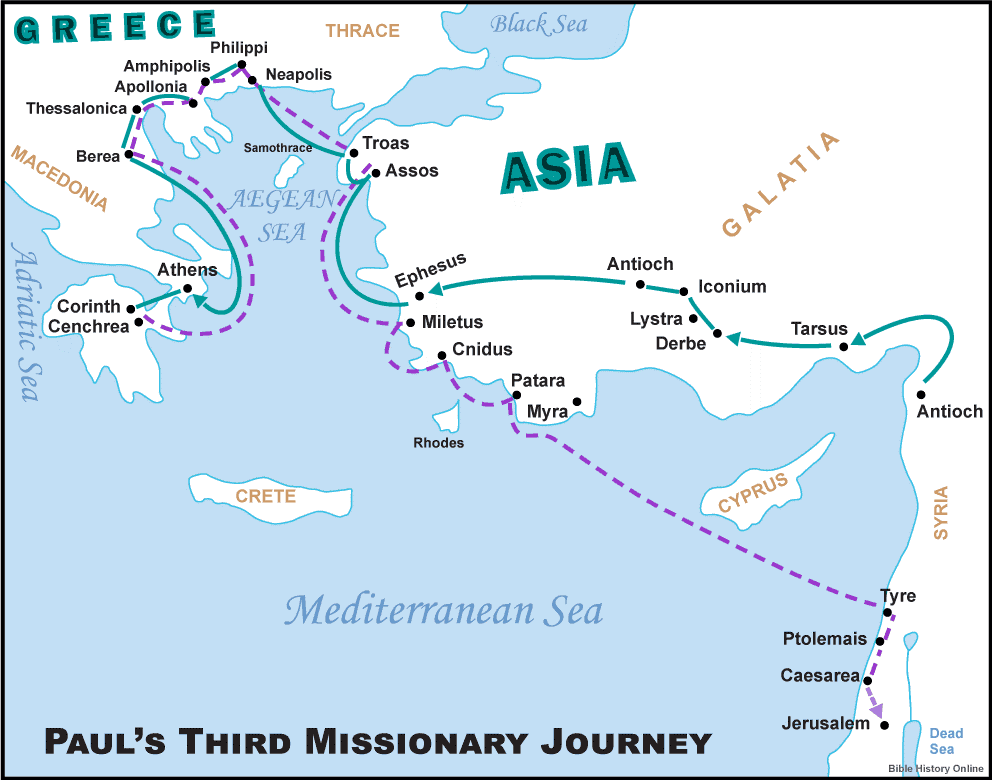
Paul’s third journey was quite similar to his second journey in that he travelled to Galatia and Phrygia to strengthen the believers. He stayed at Ephesus for three years and visited Greece/Macedonia, Troas, Miletus, Tyre, Caesarea and then back to Jerusalem.
Apollos (Acts 18: 24 – 28)
Apollos was a very learned Jew who came from Alexandria and knew and spoke boldly about the Way of the Lord. Pricilla and Aquilla invited him into their home and shared with him a broader understanding of Jesus as the Christ. He continued to speak privately and publically about his faith in Jesus.
The Holy Spirit (Acts 19: 1 – 7)
When Paul visited Ephesus he met and asked twelve men if they had received the Holy Spirit when they first believed. They explained that they had received a baptism of water from John the Baptist but hadn’t heard about the Holy Spirit. Paul prayed over them and they all received the Holy Spirit.
Hall of Tyrannus (Acts 19: 8 – 10)
Paul spoke freely in the local synagogues but after a time he faced opposition and unrest. He then went on to speak at the hall of Tyrannus, which would have taken place in the afternoon from around 11am to 4pm after and before people worked.
Seven sons of Sceva (Acts 19: 11 – 17)
Here we find that the handkerchiefs/headbands of Paul and his apron/servant girdle seemed to have the effect of healing people. Through Paul, God healed many people and the sons of Sceva wanted to replicate that power. The demons recognised Jesus and Paul but did not recognise the sons and went on to punish them accordingly.
Worship to Diana/Artemis (Acts 19: 18 – 41)
Superstition was rift in Ephesus and we find that some precious scrolls were burnt with a value of 50 thousand drachmas. Also worship to Artemis/Diana was central to the Ephesians and lots of people would have wanted shrines to take home with them. Demetrius, a local silversmith, complained that Paul was teaching that man-made gods had no power which affected his trade and income. He wanted to take Paul to court but the clerk told the people that if they felt they had a particular grievance against Paul then they should take legal action against him.
Eutychus Paul spent three months in Greece travelling, preaching and worshipping with many men and women. One evening before Paul was due to travel again he met with believers and they broke bread together. He spoke at length and after a while a young man called Eutychus grew tired and dropped asleep and then accidently fell from a three story building. It was believed that he had died but Paul embraced him and later informed the people that he was still alive which brought them great comfort. (Acts 20: 1 – 16)
The elders at Ephesus (Acts 20: 17 – 21: 1 – 6)
Paul was on a mission to return to Jerusalem and had a goal to travel to Rome. In his farewell speech to the elders he encouraged them to continue with their pastoral care for each other. He explained in humility how he had provided for himself and his companions. He then carefully told them all that he would not see them again which made everyone very sad. Paul continued his travels calling in at Cos, Rhodes, Patara, passing Cyprus, Tyre, then Ptolemais and Caesarea.
Philip and Agabus (Acts 21: 7 – 14)
Paul stayed with Philip the evangelist who had four daughters. He also met Agabus who took Paul’s belt and prophesied that the one who wore it would be tied up and handed to the Gentiles.
The brothers at Jerusalem (Acts 21: 15-17)
The journey closes with Paul and his companions being warmly received by the brothers in Jerusalem and offered hospitality from Mnason, a man from Cyprus. Later they shared with James all their experiences and how many Jews and Gentiles had accepted Jesus as the Christ.
Questions to consider
- Think about how you have grown and matured in life and faith in recent years. Have you completed the goals that the Lord gave you and what tasks are yet unfinished?
- If asked: how would you describe your experience of the Holy Spirit at work in your life?
- Do we envy those in church who seem to be involved in healings and are active and vibrant in their faith? What can we learn from the seven sons of Sceva?
- Hands up those of us who have fallen asleep when in church or house group? How wonderful that in the midst of despair and near death, we are able to offer each other love and healing as Paul did. Share together any such times you have experienced?
- Paul was told by the Holy Spirit that he would face harm and danger. How should we react to difficult times that come our way?
- All of Paul’s journeys were significant and successful’ but sadly many defended and opposed his efforts. How can we handle ‘success and criticism’ from those near or far from us?
 Explore to Inspire