
A call to renew and restore!
Background
In considering the purpose of the book of Haggai some scholars have debated that it is a single story that only relates to the rebuilding of the ruined temple. God spoke to Haggai personally and asked him to speak as a prophet to the remnant that had returned from Babylon in a timely manner.
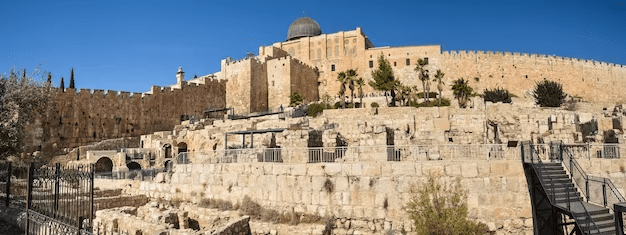
Thanks freepik.com
However, if we consider the book in a broader context, compared to other Old Testament prophets, it is narrow in calling the people to renew and restore the physical temple in Jerusalem. Even though the temple was going to be small in comparison to Solomon’s we should not despise the day of small things as found in Haggai 2: 3 and Zechariah 4: 9 – 10 and it’s influence had a future aspect to it when related to the temple body of Jesus Christ.
If we only see Haggai in the sphere of rebuilding it limits our outlook of how God works in wider situations. Many people will be ignorant to the message of Haggai but it has been very significant in encouraging believers and leaders to embrace a renewal of faith and engage in works of restoration all for the glory of God.
Bible base – Haggai 1: 1 – 15
The time has not come 1: 1 – 2
Here the opening words are the first God had spoken directly to his people in the post-exile period. It was in the second year of Darius the king, on the first day of the sixth month Haggai spoke and addressed the nation’s leaders such as Zerubbabel as governor of Judah and Joshua as the priest. Many churches and leaders turn to Haggai when they are embarking on a new or restored building project in which they want God to affirm and bless their plans. In many other cases people may only want to build a human monument of self-glory and gratification.
Within the history of the church when renewal of faith takes hold it does not automatically imply that there will be times of building and restoring physical buildings. Haggai conveys how God assessed the situation and what: ‘this/that’ people were saying in verse 2, ‘the time has not come, the time that the Lord’s house shall be built’.
Whatever project we may feel the Lord wants us to think about, the issue of God’s timing is always a major consideration and it can be concluded that the time is not right which in reality may be an excuse not to complete that which God has purposed for us! We can easily blame God for any delays in timing and provisions which may only mask our disobedience, laziness and selfishness.
If we do not do what God asks us to do in his timescale then it is our fault not the Lord’s and we should be honest about any excuses we lay before the Lord.
Reflect carefully 1: 3 – 6

Haggai points out that God’s work must come before and alongside our own plans and ambitions as exampled by Jesus in the garden of Gethsemane: ‘not my will, but your will be done’. God spoke directly to the excuses people were offering as found in verse 4 – ‘is this a time to dwell in your own homes while the temple lies in ruins’. Thanks freepik.com
It is a fact that wherever our principle interests and loyalties lie then they will be reflected in the activities we are involved in. If God’s temple is not a priority then any temple rebuild will not take place.
The times and wealth of the people post-exile must have been quite generous because they were able to build and improve their own homes. Reflect carefully and consider your ways in verse 5 is a phrase Haggai uses up to four times out of thirty-eighth verses within the book.
Haggai uses an example of how the people are sowing more yet reaping less, eating and drinking but enjoying it less, then earning more income but buying less? There is a connection between spiritual growth and poverty that increases or decreases practical productivity.
We have to be careful not to believe that all activity both spiritual and none spiritual equates to some form of spiritual maturity. However, if we seek the kingdom of God first then all other goals, aims and provisions will fall into place.
Obedience 1: 7 – 12
Haggai in verse 7 asks again the people to ‘reflect and consider their ways’ and decide if they want to bring glory to God or just reflect their own self-interest and achievements. God wanted the people to obediently go to the hills and cut down trees and use the materials to build the temple and bring glory to Himself.
God gives Haggai an insight asto why he has withheld his blessings upon the land. ‘That is why:’ because of their disobedience and distractions which only fostered an attitude of moaning. Many people only see what they will lose if they follow the Lord rather than what they may gain and in so doing not bring honour and glory to God. The comparable costs of obedience and disobedience produce their own results. From verse 12 we find that Zerubbabel, Joshua and all the remnant obeyed and feared the voice and presence of the Lord and wanted to work for him.
Inspiration 1: 13 – 15
The Lord spoke to the people in verse 13 and it has echoes of how God spoke to Moses and other prophets and leaders. ‘I am with you’’. There are over a hundred references in the Old Testament that God promises to be with his people. As a result the people were stirred up, uplifted and inspired.

When God fulf ils his promises his presence can be felt up front, alongside and closely behind us as experienced by many of the writers such as the Chronicler, Ezra, Nehemiah, Esther, Jerimiah, Daniel, Amos, Ezekiel, Daniel, and Zechariah during the times of the pre and post exile period.
When we have that daily assurance of God’s presence we are able to move forward with the plans God has for us and maintain our faith and an excitement for how God wants us to be involved in renewal, restoration and any building work. So on the twenty-fourth day of the sixth month work on the temple began as the people understood their vision and tried to estimate their own natural and spiritual energy and didn’t want to get distracted anymore.
Questions to consider
1 Generally think about what is important concerning your priorities in time, activities and giving? How do they compare to the priority given to the Lord in worship, service and thanksgiving?
2 Why is it that when we work long and hard we feel we do not have enough to cover all our overheads and expenses? What does Haggai suggests that will make a difference in respect to daily provisions?
3 How can we be inspired and maintain our enthusiasm for the Lord so as to fulfil what he wants us to do and achieve?
4 How can we ‘reflect carefully’ in maintaining a balance between looking after our homes and families and ensuring that ‘the house and family of the Lord’ are supported and cared for?
Selah (Pause to carefully consider what you have just read)
Graham
 Explore to Inspire
