A call to reject a negative spirit!
Background of the Author
Haggai was known as the Lord’s messenger and his ministry lasted for only five months during the year 520 BC. His name means Festival and in Latin is known as Festus and in Greek Hilary. The main aspect of his mission was to address the apathy of the people in their worship and service to God.
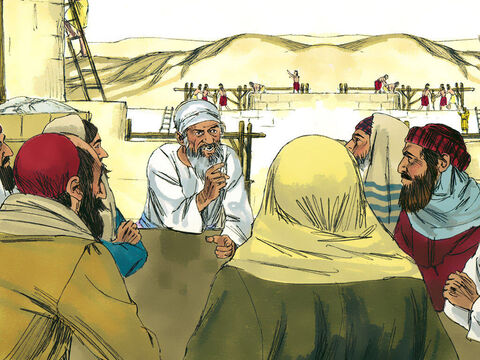
Haggai spoke to the heart and intent of the people which related to their task of rebuilding and restoring the temple. In this situation there would be no external work completed without an internal change of the people’s intentions and commitments.
Thanks freebibleimages.org
There is not much known about Haggai but he was a contemporary of the prophet Zechariah and both were used by God in 520 BC to challenge the exiles who had returned to Jerusalem under the governorship of Zerubbabel to rebuild the temple that had been destroyed in 586 BC.
Initially the people were keen to work on the temple but then they became discouraged soon after the foundations were laid, as recorded in Ezra 3 and no further work was done for sixteen years. The only other reference to Haggai is found in Ezra 5:1 and 6:14 which confirmed that the work of the temple had been completed.
In Haggai Chapter One the people were content but distracted. In Chapter Two we find them discontent and so Haggai offers them two cures for their discouragement that related to how God works in the midst of any Present life situations and then how he makes a difference to any Future aspirations and requirements.
Bible base – Haggai 2: 1 – 9
God’s formula for our Present Needs 2: 1 – 5
Haggai’s second message was dated on the twenty-first day of the seventh month that represented the last day of the Feast of Tabernacles. It was a holiday and people visiting Jerusalem would have enquired as to how the temple rebuild was progressing but sadly it had stopped.
A big part of Haggai’s message was to reject the pessimism that the people shared. In a measure it was understandable in that people were comparing past glories of the temple to the present rebuild that looked insignificant. It is a fact that no human institution can ever create something that will match the amazing glory of God. Any large Cathedral is small in comparison to God’s majesty and Solomon in his prayer acknowledged that a house built by a mortal cannot match the splendour of the heavenly (1 Kings 8: 27).
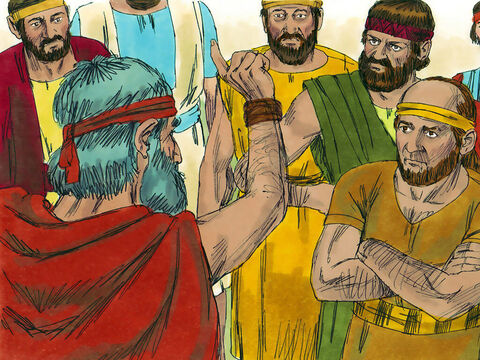
Whatever structure is built either large or small does not equate to God’s glory and the earth as God’s footstool (Isaiah 66:1). Haggai on behalf of the Lord was addressing what was troubling the people and there was no point in them getting upset over such matters for no work for God is too small or insignificant. Thanks freebibleimages.org
So Haggai tells the people:
1) To be strong in themselves.
2) To be strong under the presence of God for he will always be with us.
3) To be strong in the knowledge that God’s promises are sure and true at all times.
Zechariah 8: 9 says ‘let your hands be strong so that the temple may be built’ andin Haggai 2: 5 ‘my spirit remains among you. Do not fear’. God’s presence will act as a strength for the people. The spirit of God has always been active from creation to the ushering in of God’s new kingdom. Zechariah 4; 6b suggests that such things are not formed ‘by might nor by power but by my spirit’. As a result of Haggai’s message the people had no excuses for not getting on with the task in hand.
God’s formula for our Future Needs 2: 6 – 9
Ever since the creation of the earth God has continually acted in the Present Age and will continue in a Future Time to shake the world, human kingdoms and powers. God created life to be experienced in a Transitory Manner but he promises to complete a Permanent One, as expressed by the Prophets and Apostles in the Old and New Testaments that will ‘come like a thief in the night’. The writer to the book of Hebrews refers to Haggai speaking about God shaking the earth and the heavens (Hebrews 12: 26 -28)
So in the light of Gods power that settles and shakes the earth and the heavens we should be confident to complete the tasks the Lord asks us to do with his Almighty help and provision. In verse seven, the word desire has connotations to a Messianic future ‘I will fill this house with glory’ and an unshakable kingdom and kingthat relates to the life and work of Jesus.
The word desire can be understood in various contexts such as: precious things, wealth of, treasure, desired of all and theword has a singular and plural aspect to it. The understanding of the verse is that God is the head of all precious things and worth more than all the wealth in the world. In verse eight silver and gold are seen as belonging to the Lord which compares to that verse found in Psalm 24: 1 ‘the earth is the Lords and everything in it’.

It is important to aspire to and relish in a relative glory of material things but there is a far greater goal when we find ourselves in the glory of Jesus as our Lord and King. Being in the presence of God’s Glory is enough for everyone and will far outweigh any lack we may feel in attempting to build anything that may compare to the first and second temples.
So glory and desire in what we are asked to do can be combined with a purpose to know the treasure of God’s presence that will bring about Strength for the Present and a lack of Fear for the Future. Once again it is important to seek first God’s kingdom knowing that all other things will fall into place in their own time all for the Glory of God. Thanks freepik.com
Questions to consider
- Haggai speaks to the apathy of the people in Jerusalem. How does an internal intent affect any plans to complete or neglect any given project or building work?
- How easy is it to get discouraged in the work of the Lord? How can we maintain our focus and be encouraged in the Lord’s work?
- Discuss how the experience of ‘Past Glories’ may influence our thinking around any ‘Present Glories’. How beneficial or not is the act of comparing past and present times of glory or lack of glory?
- Haggai speaks about God shaking the world and all its kingdoms. How does that relate to the ushering in of God’s new kingdom through Jesus Christ?
- Think about what represents your ‘desires, treasures and wealth’ in life. Are they given over to the Lord so that we find strength for the Present day and a lack any Fear for an unknown Future?
 Explore to Inspire