One of the first, and hardest, life lessons I had was when I was about 10 years old. I was absolutely desperate to have a compendium of games which was on display in the window of our local corner shop. It cost the princely sum of 12 shillings and 6 pence – roughly 62 pence in decimal money. Money was very tight in our household and my mum refused to buy it.

However, what she did do was to help me to save up to buy it myself – and that turned out to be one of the best lessons of my life as it taught me to value goods and saving-up. Every week leading up to Christmas I’d give the shopkeeper some of my meagre spends to put in the “Christmas Club” until that wonderful day when I’d saved up enough money to own the prized possession. Boy, did I value that item! Thank you unsplash.com
Over the last few decades, until the financial crash in 2008, people got into more and more debt and often lived well beyond their means. Debt and loans were plentiful with banks and other financial institutions almost throwing money at people. It was a recipe for disaster and, when the crash finally came as a result of risky credit borrowing and the lending bubble burst, it was horrendous for many, some of whom lost their homes, jobs and even families. This, of course, lead to poor mental, emotional and physical outcomes as lifestyles came tumbling down.
Even now, 15 years later, many people are still in deep debt with the current financial crisis making matters worse. So often, people are not taught how to manage their income properly and have a “live for today” mentality.
I understand the UK average total debt per person in the UK was £33,410 (March 2022) and the total interest payment on just personal debt was around £44,940million. People between the ages of 35 to 44 typically carry the highest debt due to mortgages and student loans.
Graham – did people in biblical times have any form of debt and was this an acceptable way of life? What do God and Jesus say about debt? Also, do you have personal experience of dealing with people who got into a desperate situation because of debt?
Rev Graham replies
Thank you, Carol, for your very interesting and relevant question which affects every one of us. I will look at loans, interest, surety, need and want, financial planning and how Jesus sets us free from spiritual debt in an attempt to bring some application to your question.
Loans
When we think about loans and debt in biblical times throughout Israel, the loans were mostly charitable rather than commercial and designed to help poor famers during periods of poverty. However, there did exist commercial loan systems which took place within the early Babylonia period from 2000 BC.
In the New Testament there is the Parable of the Unjust Steward. It’s interesting how he dealt with debt, probably paying his tenants rent in kind, and how he worked with traders who had goods from him on credit (Luke 16: 1-15). Debt is often seen in relation to transactions of money but it also affects other issues that are owed and due within the context of business and personal relationships. In Jewish understanding, sins before God were like debts which had to be repaid through good works, sacrifices and spiritual piety (Matthew 6: 12), yet God’s grace through Jesus Christ can and does erase any debt of sin.
Interest or Usury
In considering interest or usury, the amount taken from any loan agreement wasn’t as high as some modern levels which are quite exorbitant. In the Old Testament the complaint was generally not about the amounts of interest having to be repaid but that it was practiced at all. There are three references which forbid any unbrotherly use of interest: Exodus 22:25, Leviticus 25, 35- 38. and Deuteronomy 23: 19. However, in Deuteronomy 23: 20 it outlines an exception in that foreigners may be charged certain levels of interest!
It is said that interest is like that which bites away any monies used to repay a loan. As the economy of Israel developed, it seemed that Jesus approved of financial investments which earned interest as found in Matthew 25: 27 and Luke 19: 23 but retained a distrust over any interest or other actions against neighbours as referenced in Luke 6: 27- 31.
Surety or Pledge
When we think about surety or pledge within any loan arrangement, it relates to a lender wanting some form of security around the monies lent which exists in the form of a pledge or guarantor as touched on in Proverbs 6: 1- 5. In many cases, both old and new, if there was no surety or pledge to a loan then any debtors could find themselves being sold into slavery or taken into a debtor’s prison.

A ‘Statute of Limitations’ practiced in Israel enabled all existing debts to be cancelled, paid back or forgiven and people released from slavery or imprisonment every seventh year as related to the Year of Jubilee(Deuteronomy 15) yet it was very hard to fully implement because of all its practical consequences.
The Bible, in the main, helps us to think about how we should respond to any levels of debt managed or unwelcomed.
(The Levites sound the trumpet of Jubilee (1873 illustration) Wikipedia)
In 2 Kings 4 1-7 we read of a poor widow who found herself in debt due to her husband dying. In trying to repay the debt she faced having to think about selling her sons to satisfy her creditors. Elisha told the widow to collect jars and fill them with oil to sell and any profit was to be used to help her repay her debts which was miraculous in itself. People should not be judged for any changes that occur un-expectantly but helped practically to overcome such difficulties.
Need or Want?
We are bombarded daily with choices to buy items which we need or would like to own, especially with the temptations of free credit to ‘buy today and payback tomorrow’. Individuals, businesses, enterprises and governments all use some form of debt as a means of living. The Bible does not say specifically when or how much money we should borrow or lend to others. At times we will all owe large amounts of money such as when we purchase a home, car, invest in a business or take out a student loan and each will have some form of repayment agreement, with interest, attached to it.
In the context of your question, Carol, we can ask at this point, what should a Christian approach be to debt? In life we should be careful not to become uncomfortable or anxious over any debt agreements we enter into. There are many verses in the Bible which refer specifically to debt and none of them put any value judgment upon its existence but, as people, we are very quick to offer moral judgements on levels of borrowing, debt and surety as the Bible does not say debt is a sin or a result of disobedience to the will of God for our lives
Generous Lender
It can be said that it is better to be a generous lender rather than a desperate borrower but we can only do that if we have the extra financial means to help our families, friends and community. Jesus in Matthew 5: 42 says ‘Give to him who asks you and from him who wants to borrow from you do not turn away.’ Such an instruction for one who lends without seeking a profit is ‘counter cultural’ to our materialistic culture which only lends money to gain a profit.
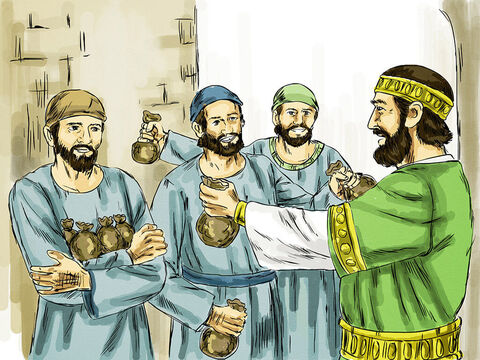
Lending from a Biblical point of view is about being generous and not just wanting to make a profit or incur a great loss. In life, as we seek to bless people and situations with our generous giving and lending, we have an assurance that the Lord in His own way will bless all our endeavours. Thanks Talents of Gold
In Proverbs 22: 7 we note that ‘The rich rule over the poor and the borrower is the slave of the lender.’ Any levels of borrowing may lead to certain obligations and a loss of freedoms. Being a lender or borrower can strengthen or weaken any particular relationships. God will judge what we do or not do and, as Christians, we have to work in and through all relationships to ensure wholesome outcomes and resolutions.
Planned Repayments
In Exodus 22: 14 it suggests that ‘if anything is borrowed, it should be paid back’. Taking out loans and getting into debt can presume that we have a secure future wherein we are able to repay such loans and debts. In James 4: 13-15 we are instructed not to make careless plans that are outside the will of God for us which may inadvertently sidestep God’s perfect will for us.
Often actions and decisions which are taken before debt occurs are very revealing. We may overstretch ourselves financially not realising that we will be unable to repay any debt. One of the greatest challenges to debt is when a sudden change of circumstances takes place which means we are not able to repay the loans we have.
You asked, Carol, if I had any personal experiences of dealing with people who got into a desperate situation because of debt. When I worked as a Project Worker for Adullam Housing in Bury Greater Manchester, the Bethany Project provided for those who had become homeless, released from prison, affected by alcohol and drug abuse, poor health, wealth and relationships and were carrying high levels of debt
In supporting the individuals within the Project we would enter into agreements which provided them with temporary accommodation and a support package to help them address any personal and relationship issues so as to get back into a more stable lifestyle.
We would set up repayment plans for them with housing providers and other agencies where they had debts, even if they were as low as £1 a week. It helped their confidence and self-esteem and showed that they were willing to pay back the debts they owed. It was great to see so many individuals turn their lives around yet equally there were many who continued in debt and difficulties.
Jesus Sets Us Free From the Debt of Sin.
When we think about Jesus’ life and ministry, he would have been aware of people around him who were homeless, in debt and struggling in many ways both materially and spiritually. Jesus did feed the hungry and instruct that the poor be supported and those who were in ill health to be healed and restored. Jesus essentially came to earth to set us free from the wages of sin and give us a gift of eternal life and have a fulfilling life here on earth freed from financial debt and difficulties (Romans 6: 23).
The Lord does not want us to be enslaved to anything that would separate us from His love and not experience life to the full. In being free from the debt of sin, we can be more focused on building God’s kingdom here on earth both inside and outside His church.
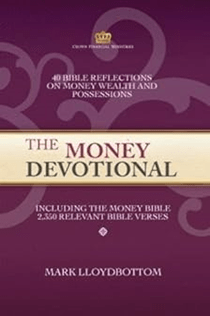
There is a very helpful book entitled The Money Devotional by Mark Lloydbottom which is connected to a bank called Kingdom Bank that seeks to work both ethically and spiritually for Kingdom Values and guide people how best to use their money and possessions. It offers up the following guidelines as a road map as how best to recover from debt.
Financial Road Map
- Make a record of all your income and expenditure for a week, month and year. Construct a budget so that your expenditure does not exceed your income.
- Try to stop any new levels of borrowing.
- Draw up a debt repayment plan with all those you are indebted to, even at a low level.
- Try to increase your earnings where possible to help repay the debt.
- Be content. Do not look to what others have compared with what you do not have.
- Consider a change in lifestyle which in itself may release some funds to boost spare income to repay your debts.
- Do not to forget to pray, trusting the Lord ‘for our daily bread’. Also bringing before the Lord all our concerns knowing His unfailing love and provision for us.
There is also the Christians against Poverty organisation which provides valuable help and support as outlined in the Signposts Section below.
Take Away
It is a fact that, in our debt, we can deny God the opportunity to provide for what we need and even want. God promises to fulfil the desires of our hearts and so often those desires he has planted into our hearts and minds so that God’s desires for us become our own and we are truly blessed.
Overall it is important to remember that any moral judgements people directly or otherwise make on levels of debt we carry, God still loves us unconditionally and will enable us to repay any debt both material and spiritual and go forth to live a contented life free from the enslavement of excessive debt.
SIGNPOST ORGANISATIONS
Christians Against Poverty (CAP) Tel: 01274 760720 – or contact@capuk.org
Kingdom Bank kingdombank.co.uk
Premier Helpline Premier Lifeline is the National Christian Helpline charity providing a confidential telephone helpline service. Call now 0300 111 0101
Christians Against Poverty (CAP) Tel: 01274 760720 – or contact@capuk.org
Money Advice – Tel: 0808 304 5194 – www.moneyadvice.co.uk
Step Change – Tel: 0808 138 1111 – www.stepchange.org.uk
Money Helper – www.moneyhelper.org.uk
National Debtline – Tel: 0808 808 4000 – www.nationaldebtline.org.uk
Community Money Advice – Tel: 01743 341929 or email info@communitymoneyadvice.com
Citizens Advice – Adviceline – Tel: 0800 144 8848 – http://www.citizensadvice.org.uk
Graham
 Explore to Inspire