It’s good to be back, Graham, and I’m really happy to see the way the Explore to Inspire website is developing. You may think my question this month is a bit frivolous but it’s one which has challenged my thinking for a long time.
As you know Graham, I’m a flexitarian and eat chicken and fish only occasionally as I have something of a guilty conscience when it comes to eating meat and fish. What really bothers me is how we should translate one of the Ten Commandments – “Thou Shalt Not Kill.”
Thank you Vane pexels.com
I may be over-thinking this but I wonder whether that Commandment also includes the killing of insects, flies and other nuisance animals which come into our homes and gardens? I know our eco-system relies on bugs who feed on each other and we definitely have a crisis when it comes to the dearth of bees as they pollinate our plants for food and what about farmers who use strong chemicals to kill bugs in order to help in the production of plentiful supplies of food?
The killing of animals, especially foxes, deer, pheasant and grouse for sport, is definitely a no-no as far as I’m concerned but I seriously worry about the whole issue of killing in relation to the Commandment.
I ask this as we recently had a massive infestation of hundreds of what were described as “book lice” although there were no books involved. This lasted many months. We did use sprays to try to get rid of them and then brought in a “bug man” who used a stronger poison. However, it did hit me that I was effectively killing some of God’s creatures although there was apparently no other way of stopping them.
It would be good to know about this dilemma from a religious perspective and also to rationale my own conscience in future should the need arise again.
Rev Graham replies:
Hi Carol it’s nice to have you aboard again so soon after your retirement and I know it’s only a one off question with maybe two more throughout the year. The refreshed website is going really well and continues to attract many readers from all around the world. Your question is a very interesting and relevant one that will resonate with many people.
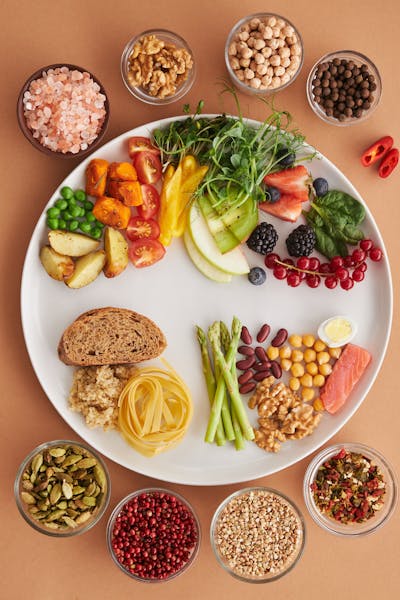
I guess the diet that we eat will have stemmed from the countries, beliefs, philosophies and cultures that have we grow up in. Today in different restaurants, cafes and homes there exist a multitude of menus to choose from that relates to how we want to eat and live respectfully or disrespectfully of how it affects the environment or if any creatures both great and small have been killed in the process.
Original Diet

In the book of Genesis it suggests that the diet of Adam and Eve in the Garden of Eden was completely plant based, not only for humans but for all land-based animals and was considered by God to be good and the best on offer (Genesis 1: 26 – 30).
Thank you freebibleimages.org
Changed Diet
Due to the fall and Satan’s influence upon Adam and Eve they chose an alternative diet to the one recommended by the Lord. Following the adventures of Noah and his family, humans were given permission to have dominion over all the earth and the creatures within it but had a responsibility to care for all of God’s creatures and the environment. Throughout world history humans have abused their position of dominion and hunted some species to extinction or near extinction and greatly scared and neglected our beautiful world.
Christian Ethics
For many years the rights and welfare of animals has been neglected and some have argued that it is the result of the Judeo-Christian tradition of dominance which has related to the neglect of animals having feelings that requires a moral respect and proper care for them. This also sits alongside the concept of stewardship and applicable to all religious teaching.
It seeks to uphold a human’s moral responsibility to act as a caretaker and protector for the earth and all its inhabitants and relates to your question Carol: can the killing of any animal be understood as a sin or linked to this wider concept of stewardship?
In the Old Testament
Animals are seen to have a worth and value to God and are blessed. They live in a symbiotic relationship with humans who have been given dominion over them reflecting the judgment of Noah (Genesis 9: 10) and that hope for renewal (Genesis 8). God provided food for the wandering Israelites in the desert that consisted of quails and manner and he accepted burnt offerings of animals that was part of temple worship and sacrifice. In the book of Leviticus there is a host of rules and regulation as to what to eat or not to eat.
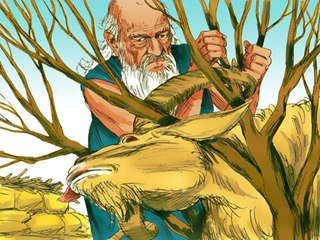
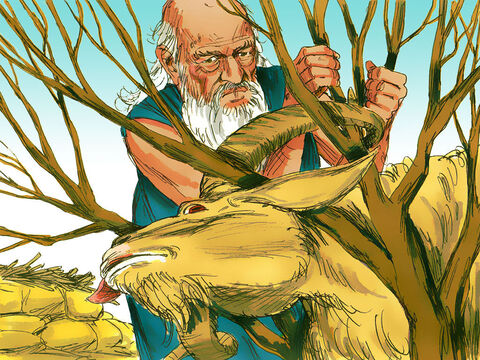
It is a very serious act to take the blood of humans and animals as blood contains life and it is interestingly how we may assess the practise of animal sacrifice as it seems inconsistent with any respect for life. Thank you freebibleimages.org
However, it can be seen within a humane ritual practise that the animal is set free to be in the presence of God rather than being viciously killed to appease an angry God. The photo represents Abraham having been prepared to sacrifice Isaac his son but instead was given a ram by God that was offered as a loving act of thanksgiving to God.
In the New Testament
There are fewer references to the status of animals but it recognises the value of sparrows (Matthew 10 29), ravens (Luke 12:24) and the care of oxen (1 Corinthians 9: 9). The sacrificial system has been replaced by the sacrifice of Jesus (Hebrews 10: 12) and as a result of the life and ministry of Christ there is a hope for all of God’s creation to experience, in God’s timing, a cosmic redemption.
Jesus changed many of the Old Testament rules when he declared that all foods are clean and there is nothing from the outside that may defile a person; it is what comes from the inside that defiles a person before God and people and therefore individuals are more free to make their own personal choices around diet as they see fit. (Mark 7: 18-19).
In regards to the diet of Jesus he ate the Passover meal that included meat (Matthew 26: 17 – 20) and he certainly ate fish. It is not clear how he identified to being vegetarian but was happy to be associated with fishing and freely rode on a donkey and spoke about how a good shepherd should be willing to lay down their life for the care of their sheep (John 10: 11) and indicates the value of animal welfare.
There is a strong case that there should be more defined Christian practises in respect to upholding animal rights, a vegetarian diet and greater care for the environment all of which can be very complex. In the Didache the early church fathers suggested that for two days of the week people may refrain from eating meat that allowed five days to eat meat. The first apostolic council told Christian to refrain from eating meat that had been sacrificed to idols but that did not apply to the killing of other animals (Acts 15: 29).
Vegetarian Diet
At this point we may consider a number of aspects in support of having a vegetarian diet.
It may be said raising and killing animals for food is morally wrong. All animals should be seen as sacred and humans can eat healthy without killing them. Animals do have feelings and rights and they should be upheld alongside any intent to kill and eat all creatures.
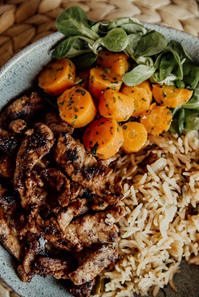
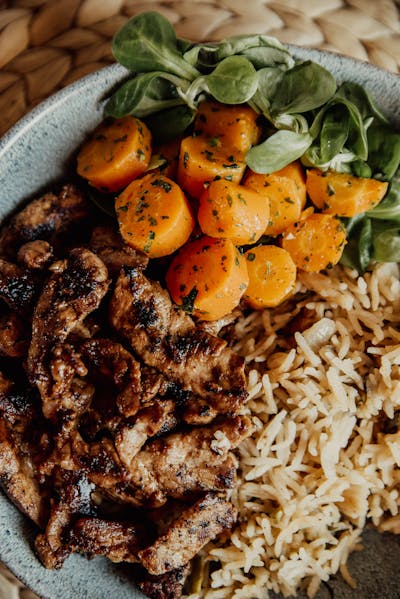
It can be argued that the excessive eating of animal meat causes humans to become unhealthy and have numerous illnesses. There is scientific evidence that a balanced vegetarian diet is the healthiest one and in that context people should have a moral duty, as far as possible, to embrace such a diet.
Thanks Alesi pexels.com
The killing of animals is harmful to the character of human beings as it cheapens the value of all life and makes us insensitive to suffering. It seems that where it is morally acceptable to kill animals it can be considered easier, when required, to kill humans.
In a world of competing resources it may be suggested that giving so much to the raising and killing of animals it takes away the possibility of providing greater and better food for all through a vegetarian or balanced diet that limits the use of grain to feed animals. Therefore, it can be argued that it is more efficient to offset world hunger by increasing vegetable protein available for all.
God’s permission to use animals for food was granted after the flood (Genesis 9: 1-4) as a concession to human sinfulness. It is interestingly to note that the legitimacy for raising and killing animals is normally assumed rather than argued in Christian theology and ethics.
In the light of such arguments for a vegetarian diet there would be a need to control any excessive breeding and living of animals. Animal products have and do provide human clothing and form a basis for many chemical and medical products for the health of all humans.
Cultural and Philosophical Diets
In Buddhism
The first precept is to abstain from the taking of life that includes all animals. To kill is to affect one’s karma and spiritual progression and prospects in any future life time. Their diet is vegetarian and includes compassion for all sentient/feeling/emotional beings and to uphold all animal rights and welfare in an ethical manner.
In Hinduism
Some Hindu’s follow a vegetarian diet and emphasize a respect and compassion for all creatures. To kill an animal goes against their principal of ahimsa or none-violence. However, some Hindu traditions do permit the consumption of certain animal products that are included in religious rituals and practices. Overall Hinduism promotes a reverence for all forms of life and the importance of living in harmony with nature.
In Islam
The main tenant of Islam is to encompass all aspects of life and does have certain dietary restrictions that are ‘lawful’ (Halal) including meat and poultry, slaughtered according to Islamic dietary laws. Those not ‘permitted’ (Haram) include pork and all it’s by products, blood animals not slaughtered according to Islamic laws, birds of prey and other carnivorous animals that includes reptiles and insects.
In Christianity
The ethics of killing animals has been often debated. Some Christians believe in the responsible stewardship of animals and advocate for their humane treatment, others view the consumption of animal products as biblically permissible. The moral implications of killing animals in Christianity are often discussed in the context of love, compassion, and ethical conduct.
In the book of Acts 10: 9 – 16 there is the vision that Peter had in which God makes clear that what may be considered clean should not be viewed as unclean and this relates to the gospel message that is clean and for all people.
Personal Diet and Take Away
Thank you for your question Carol which I found very helpful and a challenge afresh to my own diet and expressions of care for the world I live in. In regards to the ‘Commandment Not to Kill – Animals’, I have become more mindful for the rights and welfare of all God’s creatures both large and small.
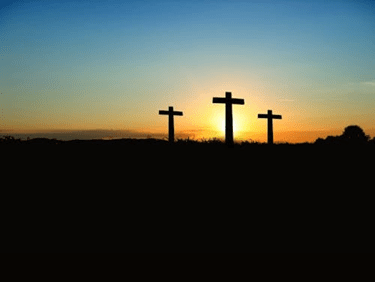
Jesus is an example of self-costly love that extends to all peoples, animals and the care for God’s world.
Within the church we have failed to fully uphold the rights and welfare of animals and how best to have a diet that enjoys every aspect of a vegetarian diet while having a freedom to enjoy meat that has been lovingly cared for and humanly killed. Thanks Pixabay
In the Garden of Eden it was a place of love, compassion and veganism. We all strive to regain that perfect place as represented in the garden and one day, hope for it to be fully restored. In the meantime as Rabbi Marc Gellman stated “Eating meat is OK, but we can do better.”
So in all the efforts to understand the Christian ethics around the life and care of animals it boils down to two main points. 1) Do we as humans have a right to kill animals and to what extent? 2) To what extent do humans have the right to cause undue suffering, pain and distress to animals?
In both cases we should enjoy our freedoms and responsibilities and then decide what is the best diet personally for healthy living and to sustain us while upholding the rights and welfare of all God’s creature and his amazing world we all live in.
Graham
Selah: (Pause to think calmly on what has just been read) and check out A Time to Worship
 Explore to Inspire