
Following on from the Insight – The Value and Challenge of Routine we have recognised the importance of routines that are remembered in the Christian Calendar such as featured in the last Insight remembering the celebration of Pentecost.
Another important event that believers join in is the Rite of Baptism and recently I attended one where there was seven candidates. Five of them had little or no Christian faith background and the remainder had grown up in a Christian family. To hear their testimonies of faith, being baptised in water and making a public witness was very heartfelt.
Aaron
The Rite of Baptism has its roots in the Old Testament and pre Christian Judaism. In Leviticus there are a number of references of those who are unclean spiritually and are required to be symbolically washed clean by water. (Leviticus 14: 8-9).
Arron and his sons were ceremonially washed before being ordained into the priesthood (Leviticus Chapter 8). Then on the Day of Atonement, Aaron bathed himself before entering and leaving the Holy Place (Leviticus 16: 26-28). As well as Aaron we read about David in Psalm 51: 2 where he wanted to be washed from his inequity and cleansed from his sin and in verse seven to be cleansed with hyssop and to be washed as whiter than snow.
Essenes
Prior to the time of Jesus there existed a monastic community known as the Essenes who lived in Qumran near to the Dead Sea where some ancient scrolls were discovered by a local shepherd that authenticated various Biblical scripts. As a group they rejected temple worship and sacrifice as corrupt and in its place maintained a ritual of purity and repentance through daily bathing and expecting the coming of the Messiah.
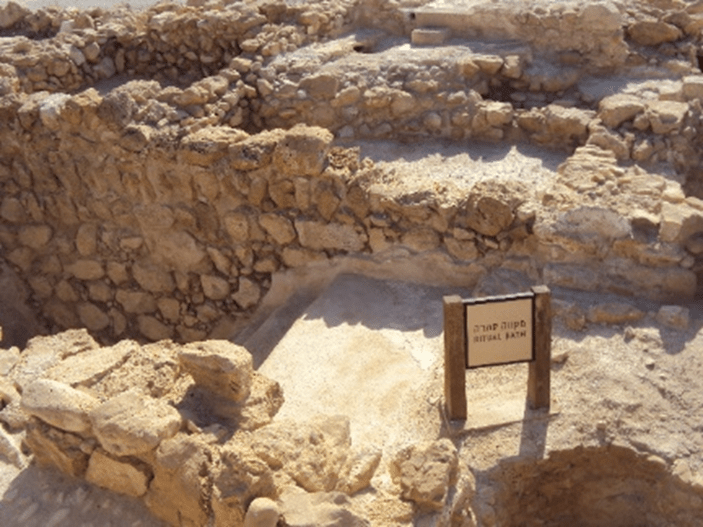
A personal photo of a bathing pool in Qumran
John
John the Baptist in Mark 1: 4 would have been aware and had some contact with the Qumran community as we may well assume Jesus did. In Matthew 3 we read about John the Baptist’s ministry and his baptism of Jesus by water and the spirit. John associated himself with the sins of the world and made clear a pathway to forgiveness declaring Jesus as the ‘Lamb of God who takes away the sins of the world’.
During the days of John there would have existed certain initiation rites that were used when a Gentile converted to Judaism that included circumcision, baptism and sacrifice and to some degree they have influenced the Christian Rite of Baptism.
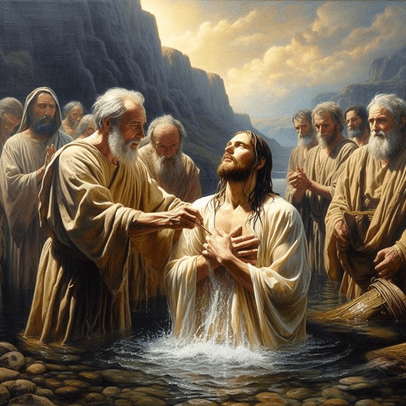
Thank you pixabay.com
Jesus
In Matthew 28: 16 – 20 the disciples were told by Jesus in the Great Commission to go, tell, make disciples and baptise them in the name of the Father, Son and Holy Spirit. The Rite of Baptism signified the call of God’s grace to all people and in faith live their lives in the light of Christ’s resurrection and future return. To partake in Baptism is only for those who truly believe and want to be a daily disciple of Christ filled and empowered by the Holy Spirit.
Early Church
In the Epistles we have a number of references about what represents a relationship with Jesus. In Galatians 3: 26 – 27 we become sons and daughters through faith and all can be baptised and clothed in union with Christ as outlined in early catechetical instructions.
In Romans 6: 1 – 5, as Christians, we have died to sin and the Rite of Baptism represents a dying and burying of our old life and then to be raised to a new relationship and life with Christ.
Paul outlined in 2 Corinthians 5: 17 that in baptism it confirmed an individual’s faith and a public desire to live for Christ empowered by the indwelling of the Holy Spirit and to be established in the Kingdom of God on earth that represents the church.
In John 3: 3 – 5 Jesus instructs Nicodemus about being able to enter into the Kingdom of God as signified in baptism that includes both water and the spirit so as to live a life of obedience to the rule of God within a hostile and godless world.
The rite, act and participation of water baptism does not seek to remove physical dirt from the body but spiritually saves and sanctifies it which embodies the simple work of Christ as found in 1 Peter 3: 21.
Throughout the life of the church there has been two main modes of Baptism.
One, involves Infant Baptism whereby a child is brought to the church by parents and guardians and is sprinkled with water, blessed and symbolically accepted into the life of the local worshipping church.
Later when the child is older, hopefully they will seek to affirm the previous promises made on their behalf, in a Rite of Confirmation, which enables them to fully partake in Holy Communion. Such liturgical forms, in a traditional church setting, has the intention to encourage all to believe, follow and become active church members in their own church, life and community.
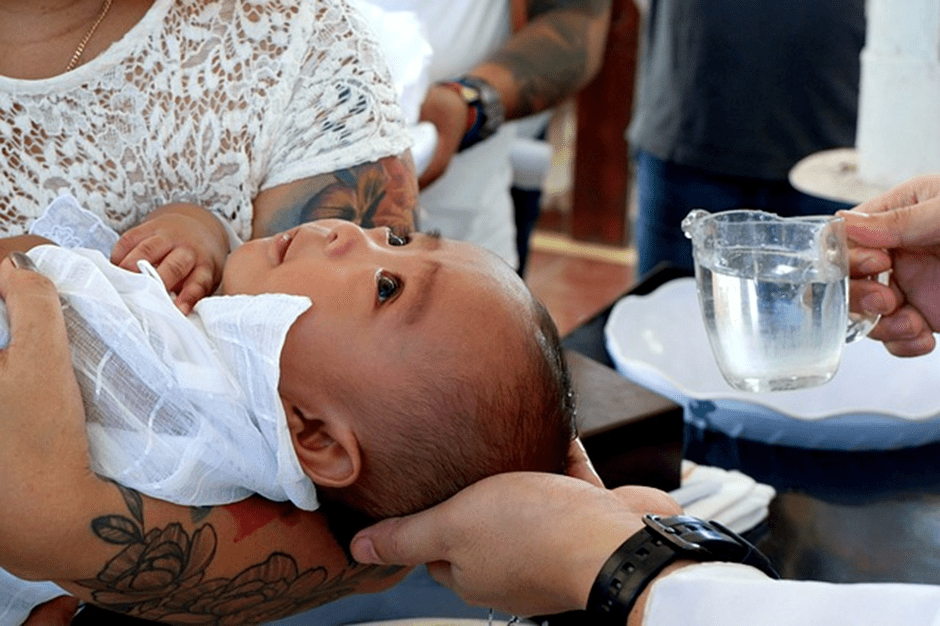
Thank you pixabay.com
Secondly, is Adult Baptism that includes full water immersion as witnessed by Philip when baptising the Ethiopian eunuch in Acts 8: 26 – 40. The eunuch expressed a personal confession of sin and repentance and accepted Jesus as his Saviour and Lord. The act of being submerged and washed by water represented him being cleansed from sin and rising to a new life in union with Christ.
Personal Experience
I was brought up by Christian parents who loved and served the Lord and after becoming a Christian around the tender age of thirteen I went on to be baptised at my local church in my early twenties.
Interestingly in 2014 during a Pilgrimage visit to Israel, I had the opportunity to be baptised in the Sea of Galilee at Tiberias, not as a second baptism, but as a confirmation of my personal and public faith in Jesus and to express a continued desire to live the best Christian life possible through the indwelling power of the Holy Spirit.
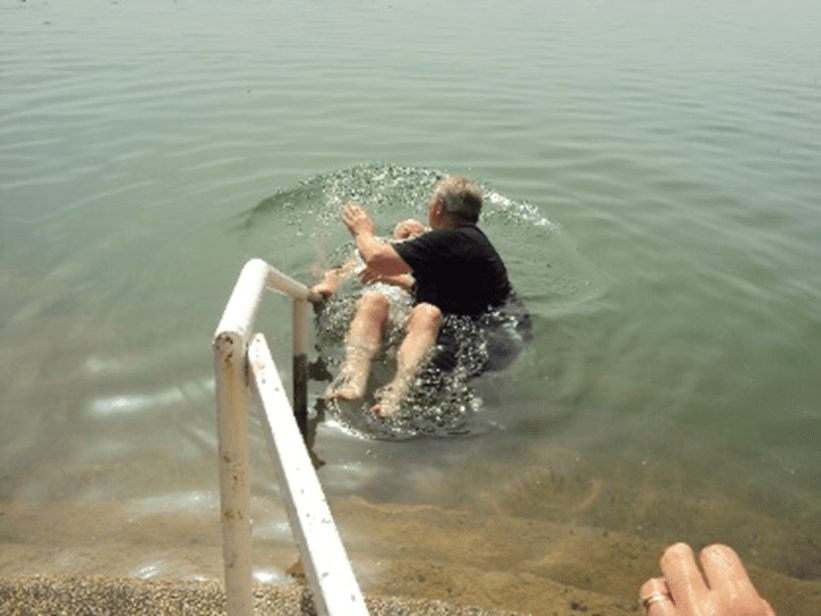
Personal photo of being baptised in the Sea of Galilee at Tiberias
When I served as a Minister at a church on the Wirral, each year there was an opportunity for people to be baptised alongside other believers from local churches. The service included a warm welcome to all, vibrant worship songs, and related Bible readings with a short sermon.
All candidates shared their personal testimonies of how they came to faith and trust Jesus as Saviour and Lord. With the help of another Minister or leader, each candidate, when asked separately, entered the warm water of the Baptistery.
As the minister I would lead in pronouncing over each candidate the following words: “On the confession of your faith in Jesus Christ as your Saviour and Lord, I now baptise you in the name of the Father and of the Son and of the Holy Spirit”. Then each candidate was immersed/submerged under the water that represented a dying to sin, then lifted up as a rising to a new life in Christ.
A big cheer and clapping would often ascend, celebrating what had taken place and accompanied by the singing of that old familiar song ‘O happy day – when Jesus washed my sins away’.
A time was given for candidates and leaders to get dry and change their clothes during which further worship songs were sung. The service concluded with a closing prayer and blessing, then some special refreshments were available for all to enjoy.
As well as church baptisms I have conducted and helped with other baptisms in the River Dee in Chester, in the boating lake at West Kirby Cheshire and in a local swimming pool.
In many non-Christian countries, when a person becomes a Christian they often get baptised very soon after conversion to establish a public declaration of faith that may result in them being cut off from their families and friends. It may be concluded that sometimes personal faith and baptism is shared secretly because of the severe threats to people’s lives.
So what can we learn from the Rite of Baptism?
Take Away
- If Jesus got baptised by Water and Spirit then surely we should get baptised as well?
- If we have been baptised as an infant does that maintain a mature and adult faith? Should we consider a further Rite of Baptism or Confirmation that strengthens our public witness and individual faith and service?
- Following Water Baptism it is important to experience a Baptism of the Spirit that will be different and unique for each follower as empowered by the Holy Spirit.
- Consider the challenges of those living in countries that persecute Christians for their faith. As mentioned it might be better for them to have some form of a Secret Baptism to preserve their life and sustain a church fellowship?
Selah: (Pause to think calmly on what has just been read) and check out A Time to Worship
Graham
 Explore to Inspire

Hi Graham really enjoyed reading your article about Baptism, incidentally my Catholic priest from Father Eamon Kelly who wrote a Foreword for my book “The Case of the Missing Body – an investigation into the mysteries of the Shroud of Turin” is based at Magdala a short distance from Tiberius on the Sea of Galilee God Bless Tony Cunliffe
LikeLike
Hi Tony Great to hear from you. That’s interesting about Eamon, I really enjoyed writing the post on Baptism and our time in Tiberius. Hope you are all okay and we are due for a meet up?
God bless
Graham
LikeLike