I would like to welcome and thank Philip for being willing to ask me a spiritual and challenging question. Philip lives and worships in London with his wife and has two grown up sons and wider family members.
‘I have been in business for almost 50 years and experienced the various financial peaks and troughs during that time. Matthew 18, starting at verse 31, reminds us how much we have been forgiven. So in practise how should we apply this teaching, if at all, to our daily working life? If the later to whom should we adopt this practise and how often should we apply this teaching and are there any limits in us doing so?’
Rev Graham replies:
Thank you Philip for your interesting question and congratulations on having worked in business for nearly 50 years and surviving all those financial peaks and troughs. You have highlighted in your question about the place and importance of forgiveness towards those who have offended us and those we have offended, by design or default, in a business context and also extended to our personal lives.
Jesus was a Businessman
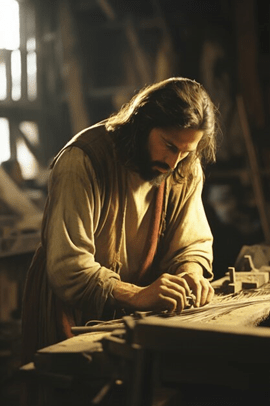
Recently I heard a discussion about whether or not Jesus was a businessman and would he have understood the particular aspects of business life? In a family Carpentry Business Jesus would have worked with his father Joseph, his brothers and other family members. Jesus may have taken over the business after his father with all its stresses, stains, joys and delights associated with it.
Thank you freepik.com
Within any family business or working organization there will be occasions where people wittingly or otherwise cause personal or professional offense and have to seek and offer forgiveness to and from them. So in respect to business and personal life Jesus knew and experienced, in a measure, Philip what you may have encountered during your 50 years.
Business Ethics
In the world of work and business there are many Business Study Degrees and courses at various levels that detail how best to implement certain plans and practises so as to have and maintain a successful business, personally and as an organization.
Business is often just about one or a small number of people, as well as a company of people doing and having a good working relationship with each other that enables them to be successful in buying, selling and providing a service! Each person will be looking to agree certain Business Plans that are ethical or non-ethical.
In the book of Proverbs 28: 6 it says that it is ‘better (to be) a poor man who walks in his integrity than a rich man who is crooked in his ways’ and in Galatians 5: 14 we are encouraged ‘to love (and be kind) to your neighbour’. As in Ephesians 4; 32 may we ‘be kind and compassionate to one another, forgiving each other, just as in Christ God forgave you’.
Love and kindness shown in forgiveness will always promote an environment for corporate success as opposed to individuals and groups constantly falling out with each other and not being kind and understanding.
There is also many aspects to business that identifies how the rich can care for the poor and the poor help to make people rich and how that relates to the Balance Sheet that may produce a loss or a profit. In recent years there has been the introduction of the Fair Trade movement and improvements in Employer and Employee contracts and other Business Models that have consequences in regards to the world of shares, investments, wealth and poverty.
Unforgiving Servant
In Matthew 18: 21 – 35 we enter into a discussion between the Apostle Peter and Jesus and it seems that Peter was often very quick to speak and that invariably got him into trouble. Peter thought that he was being generous about how many times to forgive a brother or sister and in his conversation with Jesus even attempted to answer his own question in suggesting one should forgive a brother or sister seven times.
Thank you freebibleimages.org
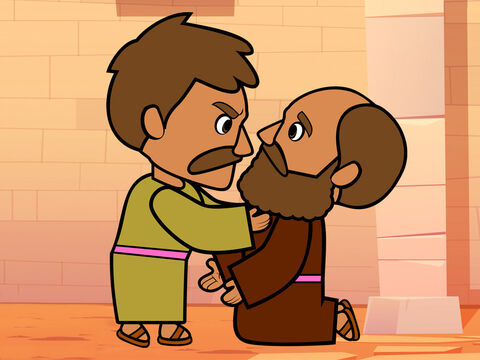
In the parable of the Unmerciful Servant Jesus makes reference to a King who kindly forgave a large debt owed to him by one of his servants. Sadly, that servant did not replicate the example and forgiveness afforded to him and even attempted to choke his fellow servant who owed him money in an attempt to get back what was owed to him!
In certain rabbinic teachings, and as found in Amos 1: 3, 6 and Chapter 2, nations who transgressed each other up to three times would be forgiven but on the fourth transgression they would be punished. The general convention was to forgive three times but after that not to forgive, as nations and individuals had been given an opportunity to be forgiven.
It was also believed that a person couldn’t be more gracious than God and therefore any forgiveness was limited to three times. So Peter was actually going beyond such conventions and being very generous with seven. However, Jesus in answering Peter went even further, and suggested that the act of forgiveness should be seventy times seven, meaning it should be available and offered continually and generously just as our heavenly Father forgives and so there is no limits to forgiving.
The Importance of Forgiveness
Recently we have witnessed new Governments being installed in different countries throughout the world. Good and Godly leaders should serve all those they govern so that prosperity, health, wealth and wellbeing exists within relationships and atmospheres that will include forgiveness in all its forms.
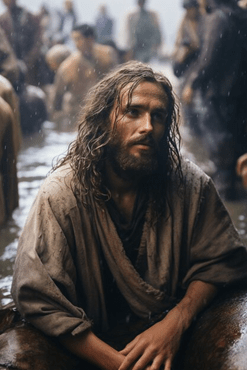
It is the same in the universal church where we think everyone is perfectly loving and kind and there is no disagreements. As we are aware such harmony never fully exists, for our selfish human natures get in the way and we do have to be forgiving for any hurt and distress we cause intentionally or in ignorance.
Thank you freepik.com
It is interesting that in recent years within the area of humanistic, medical and therapeutic models the act of forgiving and being forgiven has been recognised as an important aspect of finding healing and placement that releases us from anger, disappointment and broken relationships. I believe that both Divine and Human forgiveness must and can go hand in hand in all human relationships and situations.
Do unto others
In a brief research into studies that relate to Business and can be applied to Forgiveness, I came across this one that offers eight key aspects of how to conduct business as a Christian (Colorado Christian University).
- Take stock of your work and life balance.
- Make good ethical decisions.
- Maintain your Integrity in all relationships and actions.
- Try and understand the people you work with.
- Delegate and develop people’s skills and abilities.
- Set certain goals and evaluate them.
- At all times stay humble
- Apply the Golden Rule of Jesus as summarized from the Law and the Prophets’.
“Do to others what you would have them do to you” (Matthew 7: 12).
Take Away
In conclusion Philip to your very relevant and challenging question we cannot personally repay the debt we have incurred before God. The parable of the Unmerciful Servant teaches us that we all need to forgive in order to be forgiven. If we don’t forgive others who have transgressed us then God and others will not necessarily forgive us. In all, I think we can take two things away from Jesus’ parable:
Firstly, in Matthew 5: 7 it says ‘Blessed are the merciful for they will obtain mercy’. This echoes the Lord’s Prayer as found in Matthew 6: 9 – 13. As we receive the forgiveness of God for all our transgressions then we have a basis upon which to continually and generously forgive those who transgressed against us.
Secondly, the parable contrast a difference between the two debtors. The first debt consisted of a very large sum compared to the second that was considerably less. However, each debt was important to the King and Servant.
Any debt we have before God is a substantial one just like the first servants debt and any forgiveness we offer will be much less, just like the second servant but each act of forgiveness is equally important.
This song In Bloom by Jon Foreman is very powerful and applicable to us in the context of our actions or inactions around forgiveness. Without being forgiven or forgiving we are like a desert. Yet with those seeds of love and kindness they can grow and bloom in the desert that represents a new life in Christ. Enjoy
Graham
Selah: (Pause to think calmly on what has just been read)
 Explore to Inspire