It’s been a while Graham since I’ve sent you any questions. The one I’m about to pose to you today is something of a very personal dilemma which I’m finding quite challenging and not really sure how to deal with.
I know from both your ministry as a Community Minister and your work as a Life Coach that you will have come across many people who are either facing their own mortality or know someone very close to them.

Thank you pixabay
Without going into too much detail, I want to show love, support and offer comfort to two particular people in my life who are now facing their final journey. I want to say and do all the right things without coming over as too parsimonious. Both people do have faith backgrounds which, in some ways, makes the situation a bit easier to deal with.
I know we all have to face our final destiny at some time in the future. Are you able to advise me how to approach supporting them in their time of need, both from a faith perspective and a human point of view?
What do you think should be said to bring comfort to people in their situation? Is there anything in particular which should be avoided? Thanks in advance for any help you can offer in this difficult situation.
Rev Graham replies: (Apologies: this special Q&A is a bit longer than usual. Please bear with me)
Thank you, Carol, for yet another very relevant question that is not often discussed or any practical help and support offered. I have reflected on my own training and noted that, both at Bible College and at the completion of my Theology degree at Manchester University, I had been offered very little instruction and guidance in regards to general pastoral visiting or how to approach and work in a given bereavement ministry.
At the Bible College we were assigned to various churches and projects and in that context I began to understand and see how pastoral care was offered and received. After college, I worked as an Assistant Minister in Birkenhead on the Wirral. With the Senior Minister we talked and prepared for all kinds of visits and assessed what would be required and what was the best line of approach to follow.
We also agreed certain outcomes that might be required in the short or long term. Together we considered the importance of follow-up visits which might take a different form as some being referred to a specialist person as required.
During my time in completing a One Year Certificate in Counselling, I learnt the skill and importance of active listening and questioning which takes place in therapeutic and pastoral conversations.
As a Life Coach, I worked with many different individuals, some who had a strong Christian faith and many who had no faith at all. I continued to apply the skill of listening intently and trying to understand where individuals were coming from and what life situations they were facing.
I did not seek to tell them what to do or direct them to what I thought they should do. I listened and helped them reflect and work through their circumstances and many were able to navigate a best way to cope, progress and overcome problems and opportunities they had and wanted to face up to.
In the Bible we read from Genesis, many instances where God spoke to individuals and instructed them to overcome the challenges they faced. For example, Adam and Eve in the Garden and Noah facing a flood and having to build an Ark.
Abraham had to think about sacrificing his own son and negotiating the destruction of Sodom and Gomorrah. The Lord continued to visit and instruct various kings, prophets and ordinary shepherds. He intervened in the life of people who were hungry, facing death, persecution and so much more.
Thank you freebibleimages.org
For the Christian, Jesus is the model as to how we may visit and support our family and friends. He visited the outcasts, the poor and the sick. He understood the vulnerable and those who were dying and had died, such as Lazarus, who he wept for and even raised back to life. Jesus had to face up to persecution and crucifixion yet, with such a shortened life, he has changed the world forever and is very relevant even for today.
Jesus had compassion for those around him and instructed the Apostle John to look after his mother Mary. He asks all his followers to feed and care for his sheep, just as a loving shepherd does. In some of Jesus’ closing words to his disciples in John 14: 1-6 v 27 he makes clear that in the midst of all our troubles and concerns He brings his perfect peace that is different to what the world has to offer and is, above all understanding.
Jesus informed the disciples that, in his absence, the Holy Spirit would be our comforter and from that we would be able to comfort others. The Apostle Paul confirms such sentiments as found in 2 Corinthians 1: 3- 5.
One thing I have gleaned from my years in Christian Ministry is that people approach the end of their earthly lives, not too dissimilar to how they have lived it as exampled in that phrase: ‘as in life, as in death’. So, in responding to your question Carol, I want to approach it in five ways which I hope may relate to your present time of support to your dear friends.
Preparation
When visiting a close friend or someone in a formal manner I think it is very important to prepare ourselves in our appearance, hearts, minds and spirits. It is good to dress appropriately, however that might be, in proportion to the nature of a visit.
The visit may be planned to be short but could extend beyond our expectations and so any required refreshments beforehand is helpful. It is vital that we have prepared our hearts and spirits in prayerful contemplation, bringing the needs of those we are to visit to the Lord trusting that we may be granted a measure of wisdom and understanding as required.
It will help if we are ‘present’ during a visit and not ‘distracted’ or give an impression of wanting to prematurely end the visit. As we have prepared ourselves sufficiently we will be able to offer consolation to the person we are visiting, hopefully with a sense of God’s presence within their hearts and minds, even though they might have no faith in God.
Setting
Every person we visit has their own backstory which is unique to them. It is so special and a reminder that God has created all peoples of the world and unconditionally loves us all and wants the best for us as we trust in Jesus as our Saviour and Lord. It is important to recognise our relationship to them as a close friend, acquaintance or visiting in a formal or professional manner.
If the relationship is an honest and open one, then in times of difficulty it may continue to be open and honest. However, we do have to respect that in some situations our friendships require more privacy and quietness and therefore we respect that and don’t take any change in the relationship personally.
In any visit, discussions will interchange from the trivial to the more serious. Any capacity to talk and listen in a new way might not be easy for both parties. So, in visiting your two friends Carol, hopefully your conversations will be normal but if they become more solemn and serious then try to adapt and respect that. To be comfortable in quietness seeking to share a Godly presence which will bring peace and calm.
The physical setting of a visit is important also. For example it might not be the best place in a family home, that may be less private and inhibit any sharing. It might be that a neutral and favourite place of those you are supporting is better so that they may feel more comfortable and able to talk freely about matters which are concerning them.
Jesus asked Zacchaeus to come down from the tree as it was better for them to go to his home and chat over tea!

Thank you freebibleimages.org
Purpose
Any visit, I believe, has a particular purpose to it. Often it is for fun, company, laughter, discussions and catching up on life generally. If I have been asked to take a funeral service for a family, my purpose becomes more formal and has a particular focus to it. I would be wanting to offer comfort by listening to how the loved one had died. How the immediate family feel and what particular impact the death is going to have on all concerned. Also to make practical arrangements for the funeral to take place.
If I visited a person in hospital who is poorly, then it would include words of encouragement and a time to listen to how they are feeling. I would want to share a reading from the Bible and offer up prayers for healing and a blessing. If I was visiting a family to discuss about a wedding, baptism, prayers for healing and a sharing of Communion at home, then the conversation and any listening and asking of questions would take a very particular and pointed form as necessary.
If I visited someone and immediately started to ask questions so as to get answers, that would be inconsiderate of me and convey a lack of love and empathy on my part. We have two ears and one mouth for a reason and so we need to listen more than we speak.
During a visit it is not about how we feel or are in the situation. It is about how we may offer help to those present and for them to express their concerns. Hopefully, as a result of their reflection and thinking about what is worrying them, they will come to their own conclusions without taking on board what we feel they should do or say!
So it is vital that we understand the nature of any visit and relay that to those we are visiting for transparency and confidences. Is a visit for general support and a chat? Is it specifically to explore together a new pathway that relates to issues of wealth, health or practical problems that are troubling us?
Outcomes
As a follow-on from any preparation and setting of a visit, it is important to know personally and to understand what the person we are visiting wants from any visit. We have to be congruent and not have any mixed motives which will affect and confuse outcomes. When I shared in some bereavement training, one of the concerns we discussed was about how we spoke about dying and death.
Thank you Wikipedia,
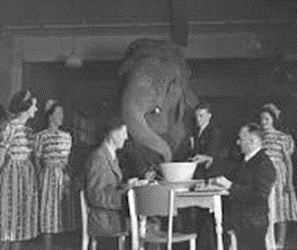
Do we speak upfront about the subject or do we ask the people concerned how they want to address the subject. Often we avoid the obvious and any mention of death and dying. It becomes ‘The elephant in the room’ which might be unhelpful for the person concerned and the one visiting.
In any visit and supportive conversations, it will be important to refer to certain experts and professionals. It might be advisable to seek out specialist counsellors, priests, medical staff, home helps and even financial advisors. It might be appropriate to support friends and family to make a Will and a funeral plan.
It is important to be focused in a visit but also be ready to go ‘with the flow’ as dictated by the person we are visiting. Any outcomes which are required in the short or long term can be monitored and addressed as further visits and discussions take place.
Follow up
When we think about how many visits we might make over a period of time, it might be obvious or complicated. In some instances it may be quite appropriate to make one visit and feel we have done our duty towards those in need. On the other hand it might be harder to follow through on an initial visit in a general or more specific manner, depending on what type of support is required. Often a series of visits over a period of time are better until any particular goals or outcomes are completed.
Takeaway
In Psalm 41: 1-3 it reads ‘Happy are those who are concerned for the poor (and poorly); the Lord will help them when they are in trouble’ and we will be blessed ourselves.
In 3 John 1: 2 it reads “Dear friend, I pray that you may enjoy good health and that all may go well with you, even as your soul is getting along well”. John makes a connection between physical and spiritual health.
In regards to your two friends, Carol, who are facing the end of their life journey on earth, I would suggest that you continue to be your special self. You know your relationship with each person and what you may say and do or not do or say. Be ready to enter a deeper level in your friendships as required which will last for a particular season.
Make good preparations for your visit and ask the Lord by his Holy Spirit, to comfort you so you may be a comfort to your friends. Seek out the most relaxing place for you both which fosters free-flowing conversations in which you may go from the serious and tearful, to times of fun and laughter almost in the same breath. Try not to avoid outcomes but allow outcomes to follow their own timescale and conclusions.
May you find strength to continue your supportive visits which at times may become inconvenient by telephone, text or personal visits. In your support to your friends, trust and pray that in some measure you may radiate the presence of God. I have heard it said on many occasions that we often do not know what to say or do in certain situations but, as we dwell in the presence of the Lord, those we visit will also know His peace and presence through us.
I must admit that I love to be involved in pastoral care and support. I have received so much love and support in my life that it seems to flow out of me in a very natural way and has shown itself in a professional and vocational manner for over forty years. It is an honour and privilege to sit at somebody’s bedside in a hospital knowing they have a short time to live and try to be brave in lightening the conversations and to be happy just to say nothing and listen and help them feel loved and affirmed.
Selah: (Pause to think calmly on what has just been read) and check out A Time to Worship
Graham
 Explore to Inspire