
I would like to introduce D, a very special friend of mine. D describes herself as a 59 year old female who has had significant health and fertility issues in the past and is a retired Civil Servant. The question she has asked me to consider is contained below:

Thank you ddzphoto pixabay.com
“I have wondered for over 20 years that, if I got a chance to sit down with God, I would like to ask him about some life issues which have concerned me. In the grand scheme of things we’re all here for a short space of time, around seventy plus years if we’re fortunate.
I’ve had my fair share of ill health but I’m still here. One thing that I always say when people ask why has this happened to you or why has that happened, I always respond by saying that God has made me no promises for this life, only a promise of eternal life if I accept Jesus Christ as my Saviour.
I’m curious to know, Graham, why the plan he had for my life was for me not to have a birth child. Why me? However, I was able to adopt my daughter whom I love very much. Even though I didn’t give birth to her it seems like I did. I can’t imagine loving any other child more.
But why, unlike all of my friends, was a birth child not in my plan? The hole I had in my heart before she arrived was closed the minute I brought her home.
On another note, I have a friend who was days away from giving birth when she discovered that her baby had died. What a cruel turn of fate to go full term and then have nothing. To prepare and then be alone. I accept that sometimes God says ‘not yet’ or, in my case, never. But why? I hope to get the chance to ask Him one day and I know that, if I do, I’ll understand”.
Rev Graham replies:
Thank you, D, for your question which has no easy answer to it, if any answer at all! I want to very briefly explore some possible explanations which may help individuals to continue the life God has given them, even the ones not welcomed.
In the widest sense, D, your question touches on the vexed question of suffering as exampled in the loss of your friend’s baby which seemed so cruel and pointless. It might be helpful at this point to read a previous question that I have been asked: Why does God allow Suffering?
Plans and Ambitions
It is right and proper that we all seek to make plans and try to fulfil various ambitions personal to each one of us. The modern mantra is: ‘if we put our minds, wills and efforts into plans and goals, we will be able to successfully achieve them’. That might be true in one sense but in reality whatever plans we make are subject to human frailty and the will of God in the short and long term and are often out of our control and desire.
Promises
You mentioned about promises, D. You are right in that God does not promise us a perfect life and He does not favour one over the other. We are all precious in His sight and, whatever earthly situations we have to face, God promises to give us grace and strength to work in and overcome them with that eternal promise of a new home and existence which is beyond human comprehension.
Fertility in Medicine
As individuals, and as a couple, the desire to have or not have a birth child is very natural and in certain incidences all consuming. It is important at this point to recognise that infertility is not exclusive to a female or male; both will be affected by physical, emotional and circumstantial considerations.

A Symbol of Hope and Support
You presented yourself, D, as someone who has had “significant health and fertility issues”. Within that context you would have received lots of advice and wisdom as to what is available to achieve fertility and to overcome illnesses from many medical practitioners. They would have offered various treatments and pathways for your concerns which led to the inclusion of adoption and a closure of that “hole I had in my heart”.
I have published two further questions I have been asked previously entitled Should Humans Interfere With Nature? and How Would God View Outside Intervention?
Both topics relate to how God works in the field of nature and infertility and I’m sure you will be familiar with their content but they may help in your continued thinking.
Fertility in the Bible
In the Bible there are a number of incidences where both male, female and couples are deemed as ‘barren’ and unable to have a birth child. In some instances, God did intervene in a miraculous way and I believe can still do today. However, there would have been those for whom God did not intervene and they would have been very disappointed and their faith and trust in God somewhat challenged.
In the reading from Isaiah 54: The image conveyed is one of Jehovah, as the faithful husband, who forgives Israel as the unfaithful wife and restores her to a place of blessing. There are other references to the marriage image in the Old Testament which reflects a relationship between the Lord and those who follow and serve him.
Israel is referred to as a ‘barren women’ without a child. Her condition is related to her sin and a turning away from God. However, God promises that, out of her barrenness, Israel will shout with joy and cry aloud for all the new descendants of the desolate. They will be more than those who have given birth to their own children.
You gave testimony D about not having a child of your own. In the context of fertility, one cannot assume any root cause is sinfulness. We are all liable to ‘fall short’ of what God requires from us on a daily basis but we can know his full forgiveness.
In your darkest days you continued to trust in God for his love and mercy. You explored other options that successfully included the adoption of your daughter. Even though you hadn’t given birth to her you couldn’t imagine loving any other child more.
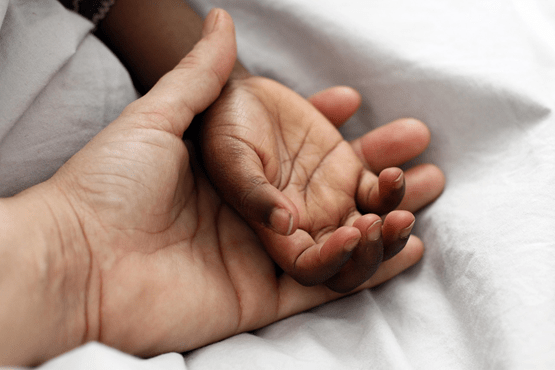
Thank you cat 6719 pixabay.com
At this point I will briefly refer to a number of individuals in the Bible who experienced infertility.
God had promised Abraham a son and heir. It seemed impossible that Sarah was able to give birth to their own child, Isaac. God’s promise to them was fulfilled. (Genesis 15 and 21)
- Isaac and his wife, Rebekah, had to wait twenty years for the birth of Jacob and Esau. Often God’s promises take a long time to be fulfilled. (Genesis 24 and 25)
- Leah and Rachel competed for the attention of Jacob. Eventually, the Lord gifted Rachel her own children, Joseph and Benjamin. (Genesis 29 and 30)
- Manoah’s wife was ‘sterile’ and an angel visited her and told her that she was to conceive and have a son named Samson. It seemed Manoah was not the most understanding and supportive husband. (Judges 13)
- After all the loss Naomi had encountered she married Boaz and gave birth to Obed. God is able to bring to us unexpected new beginnings. (Ruth 4)
- Hannah was not able to conceive and felt quite downcast. The Lord gifted her Samuel whom she dedicated back to the Lord for temple service. (1 Samuel: 1)
- During the travels of the prophet Elisha he met a wealthy Shunammite women who was very hospitable. As an act of thanksgiving, he rewarded her with the miracle of a child. Later on the child died but Elisha miraculously brought the child back to life. (2 Kings 4: 8 – 37)
- Elizabeth and Zechariah, the priest, were quite old and without a birth child. An angel visited Zechariah and told him they were to have a child to be named John (John the Baptist). Once again ‘nothing is impossible with God’. (Luke 1)
Take Away
Over the years working with individuals and families, I have noticed that some parents have loved their adopted children more than those who have had their own children which I find hard to understand. The Lord wants the best for us, even if that includes plans and goals that we are not able to realise. Without a birth child, we can still show love and care to all our family and friends as adopted ‘parents, aunties and uncles’.
As mentioned, D, there is no complete or acceptable answer to your question. Suffering and disappointment are common to all peoples as exampled by Job in the Old Testament, Jesus on the Cross and throughout the world.
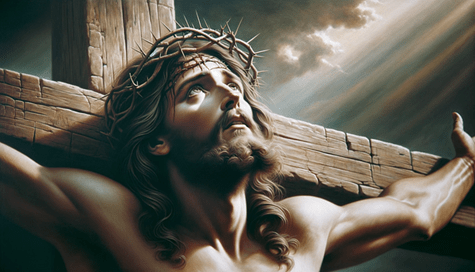
Thank you Kar 3nt pixabay.com
Within any local church fellowship we should not feel judged in any way. We all seek legitimate aspirations and expectations which may not materialise for whatever reason. To experience Christian love, understanding and compassion may guide and help us through some of the most horrendous and sad moments in our lives which is part of our gospel witness and duty to all peoples and has to be unconditional.
As we are forgiven and accepted from the Lord, we may be blessed with a natural and adopted family which the world cannot replicate. In faith and trusting in the promises of God, we can experience that ‘unexpected best’ with thanksgiving and trusting in God’s continual strength and comfort.
Selah: (Pause to think calmly on what has just been read) and check out A Time to Worship
Graham
For further reading;
Infertility and Barrenness in the Bible by Traci McCombs
God remembers the barren and so should the Church by Jean Hesse
What does the Bible say about fertility by GotQuestions.org
 Explore to Inspire


