Carol says: It’s Easter time again and the shops are full of chocolate eggs, cute-looking bunnies, fluffy chicks, hot cross buns and all the other items associated with that special time of year. Well, I say “special”. But just how “special” is it to most people these days? How many actually know what its true meaning is and what it represents?
Ask most children, and even many adults, and they look askance. Like Christmas, they just think it’s a time to over-indulge in beautifully-decorated commercial goods without looking any deeper.

But Christians know that it’s far more than that. In fact, it’s one of the most important religious festivals in their calendar because it’s all to do with Jesus’ death on the cross, His resurrection from the dead and coming back to life three days later. Because of this resurrection, Christians believe that everybody will be brought back to life on Judgement Day when we will all be judged individually. According to the Book of Revelations, after people have been judged, they will be sent to either Heaven or Hell. Thanks Jessica pexels.com
I think the thought of being judged for our actions throughout our lives is pretty scary but it does help many of us to focus our minds on keeping on the straight and narrow. Having said that, I also think that it’s wonderful to believe that we’re going to a better place, to hopefully meet God and to be reunited with our loved ones.
Graham – many people these days view religion as fanciful superstition and believe that once we die, that’s it. Personally I find that thought really depressing and would rather live in hope than not. What do you believe Jesus’ resurrection was all about? Have you any way of proving that this really happened? And what makes you personally have such a strong faith?
Rev Graham replies:
Thank you, Caro, for your very relevant question which is, for some an irrelevance and for many, central to their Christian faith and hope for eternal life after death. Such a topic is not easy to apply to daily living and cannot be proved or disapproved. Let us consider together a number of points that will guide us to a better understanding of the meaning and worth of Jesus’ resurrection and its application for the Christian.
At this point, Carol, I have to apologies for the extra length of the reply as the topic is so expansive and if possible you will be uplifted when studying all the bible verses referred to!!
1) Life After Death
In the ancient world the belief was that death was all powerful and could not be overcome. Homer wanted a new body but knew he was not able to get one whilst Plato wasn’t interested in a new body but was concerned for the disembodied soul! Any thought of resurrection at that time did not include concepts about life after death as found in the Jewish and then Christian tradition.
In Mark 12:18 – 27 we find the Sadducees questioning Jesus about resurrection and, at that point, the disciples would not have fully understood Jesus’ teaching around resurrection. The Jewish teaching was that resurrection took place after a time when God had looked after the soul, which represented the inner person, which then ushered in judgement when believers received their new resurrected bodies.
Since the Middle Ages we have been influenced by Greek philosophy with a future hope based more on Plato’s view of the soul which enters a disembodied experience rather than the biblical view of a new heaven and earth. Plato believed that all material was corrupt and sought the spiritual which was pure.
2) Time Within Eternity

When we consider the past, present and future, we only are able to assess it in the context of earthly time. However, scripture brings to us another concept of time that is everlasting which we cannot fully comprehend from the beginning to the end. As we study the teaching of the resurrection, it is important to understand how heavenly and earthly time intertwines, with the ultimate promise for the Christian of everlasting life in God’s presence.
The New Testament reveals how Christ has entered human time to restore harmony between the Godhead, mankind and creation. This salvation and healing takes place in current time and relates to a future time. True progress on earth can only take place within the context of spiritual reconciliation.
In 2 Peter 3:1 – 13 Peter recalls the words of the prophets and Christ in regards to the end times. God’s creation waits for a time of renewal and hope as echoed in Romans 8:18 – 27 which will be different to any earthly renewal that is limited. In thinking about our earthly life and life beyond in God’s presence is not an easy thing to comprehend for “with the Lord a day is like 1000 years and 1000 years are like a day.” Thanks Thomas pexels.com
God has the power to create, sustain and recreate a new order in any way He wants and within His own timescale; God will bring about a destruction (2 Peter 2:10) and then a reconstruction (2 Peter 2:13). In all the discussions we may have about past, present and future life we need to understand that different timescales exist and so exercise greater trust in events seen and unseen, having hope for the present and future.
3) The Legacy of Jesus
The Christian faith offers us a sure faith and a certain hope in God as our creator, Christ as our saviour and the Holy Spirit who comforts us. Belief in a resurrection from the dead finds expression in at least eight Old Testament passages (Job 19:26: Psalms 17:15: 49 v 15: 73: 24: Isaiah 26: 19: 53:10 – 12: Daniel 12: 2 v 13) and five types in the New Testament
1) A physical resurrection of certain individuals to renewed mortal life: (Widow’s son, Luke 7:14 – 15: Lazarus, John 11: 43 – 44: Women, Hebrews 11: 35).
2) A past bodily resurrection of Christ to immortality: Romans 6:9.
3) A past spiritual resurrection of believers to new life in Christ: Colossians 2:12.
4) A future bodily resurrection of believers to immortality: 1 Corinthians 15:42, 52.
5) A future personal resurrection of unbelievers to judgement: John 5: 29: Acts 24:15.
Generally, the resurrection implies transformation (1 Corinthians 15 v 52 – raised immortality) and exaltation (Acts 2: 32 – 33: 5: 30 – 31). In its fullest sense resurrection is the power of God at work raising a person from the realm of the dead to new and unending life in his presence. It is an event leading to a state.
The resurrection of Christ acts like a pledge for the bodily resurrection of believers (1 Corinthians 6: v 14. 15 v 20 v 23 v 48). The believers are raised with Christ (Ephesians 2:6: Col 2:12, 3 v 1) and share his victory over sin and His risen life (Romans 6: 4, v 10 – 11).
The Holy Spirit is closely associated with believers’ resurrection as the spirit of life (Romans 8:2) who imparts life (2 Corinthians 3: 6). According to the Apostle Paul, the Spirit is the pledge and means of a future resurrection transformation and the one who sustains resurrection life (Romans 8: 10 – 11: 2 Corinthians 5: 5; 13 v 4: Ephesians 1:13 – 14).
Jesus’ teaching concerning resurrection reinforced the existing Jewish position but also radically changed it due to his own death and rising from the dead. He also introduced the new concept of the kingdom of God. Jesus spoke of resurrection as a complete event that would take place in the future when all the righteous would be raised and in resurrection would enjoy a new state altogether. This relates to a number of Old Testament references to resurrection as found in Daniel 12, Isaiah 26 and Ezekiel 37.
Redeemed humanity’s resurrection is linked to the whole of creation’s renewal as in (Romans 8:18 – 25: 1 Corinthians 15: 20 – 28: Philippians 3:20 – 21) Just as at the fall of man in Genesis, the restoration will affect creation also. A new heaven and a new earth (2 Peter 3:13: Rev 21: 1 v 5) and so a new resurrected body.
4) Christian Hope
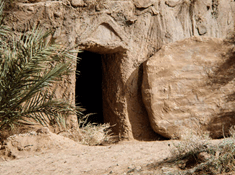
The early Christian view of a future hope was based on Jesus’ teaching and particularly his own resurrection experience. This hope was thought of as Paradise, a place of rest where God’s people resided prior to resurrection. Early believers had a precise view of their personal faith and hope yet subsequent teaching has muddled such understanding.
Easter is an event of joy in the midst of loss which brings hope for a future event that will be completed when Christ returns to bring in judgement of all and the bodily resurrection for believers. What God has done for Jesus he will do for the believer and this represents a recreation theology similar to creation theology as found in Genesis 1 – 3. Thanks free bibleimages.org
The sole aim of a Christian is not just to enter heaven after death but to have lived a purposeful life on earth that in turn will be completed in the future realm. In considering the views of resurrection we find no complete agreement in the church about what happens when we die and what our fate will be. In the Revised Standard Version of the bible, the body is referred to as physical and spiritual yet it is better to think of them as present and future bodies:
A Present Body is driven by our souls, experiencing daily life and is powerless against illness, injury, decay and death. A Future Body is driven by God’s spirit dwelling within us and is incorruptible and everlasting. Paul does not believe that we will be with the Lord in a non-bodily form – a Platonic heaven with the body seen as evil and the soul as good. As believers we should be experiencing daily renewal which will be gloriously affirmed in God’s future. Our present toil is for a season only, for what we do in our present body driven by our soul will be reaffirmed in the future in ways that we can only conjecture about.
5) New Life
At this point, Carol, we may be able to expand your question to the following sub-questions such as:
Who is raised from the dead? – According to John and Paul it will be all people who believe in Jesus.
Where will the resurrection take place? – CS Lewis in his book The Great Divorce tries to imagine what the risen body might be like. Bodies will be more solid, real and substantial than the present body as described in 2 Corinthians 4:17 as a weight of glory.
What good or bad parts of our present body are to be retained? – Jesus appeared to his disciples and showed them his wounds that represented a victory rather than defeat. The new body may show signs of loyalty to God, even in the face of suffering. Plato believed all humans had an immortal element to them and that was represented as the soul. In the New Testament, immortality is something only God possesses by nature but graciously shares as a gift to all believers.
Why will we be given a new body? – The early Christians believed a new body would help govern the world better. Work will need to be done and that will be enjoyed rather than endured. All skills that have been used to promote the gospel and things that people have given up will be enhanced and ennobled and used unto God’s glory.
This aspect of resurrection is least studied yet a number of promises exist to support God’s people during their reign. Romans 5: 17: 1 Corinthians 6: 2, Timothy 2: 12: Revelation 1: 6, 5 v 10, 20: 4, 22 v 5: and depending on translation Luke 19:17, 19. The whole of the universe will be renewed so there will be plenty of work to do. A new body is God’s gift and reward to believers which may be hard to accept. Therefore, as in 1 Corinthians 15: 58: what we do today is not wasted, as it will be completed in the future.
When will the resurrection happen? – Many believe that after death we go straight into resurrection yet 1 Corinthians 15 implies that we will all be raised at Christ’s coming. In Revelation 6: 9 – 11 we read ‘the dead will wait patiently for the time when they will finally be raised to a new life.’ So a constant theme in Jewish and Christian teaching is the place of an intermediate state prior to resurrection. The new is not just a replacement of the old but a transformation and, as the old has not been transformed, so resurrection has not taken place. The whole concept of time will be transformed in ways we are not able to understand at present.
How will the resurrection happen? – This process will be a great act of new creation and John Pokinghorne puts it one way that might be helpful. ‘God will download our software onto his hardware, until the time when he gives us new hardware to run the software again.’ Paul says God will give us new bodies that have some continuity to our present ones as in the case of Jesus. However, God is quite capable of recreating people even if their ashes have been scattered into a fast-flowing river.
To conclude, Carol, whenever the question of ‘how’ is raised in the early Christian writings the answer is given: ‘by the spirit.’ The same spirit that has been active in creation, salvation and sustaining the present world will be at work in recreation and so that gives us continual hope for today and tomorrow in whatever circumstances of life we find ourselves.
Happy Easter and an Eternal Life to come.
Thanks to Bishop Tom Wright and his book ‘Surprised by Hope’ which has given much clarity and inspiration as I have wrestled with this very complex yet exciting concept of the resurrection of Jesus and its impact for everyone.
Previous Questions
 Explore to Inspire